


Drehkreuz-Tor des Lagerhauses: Welcher Tortyp passt zu deiner Zone, Benutzertypen, und 24/7 Operation
2026-04-02


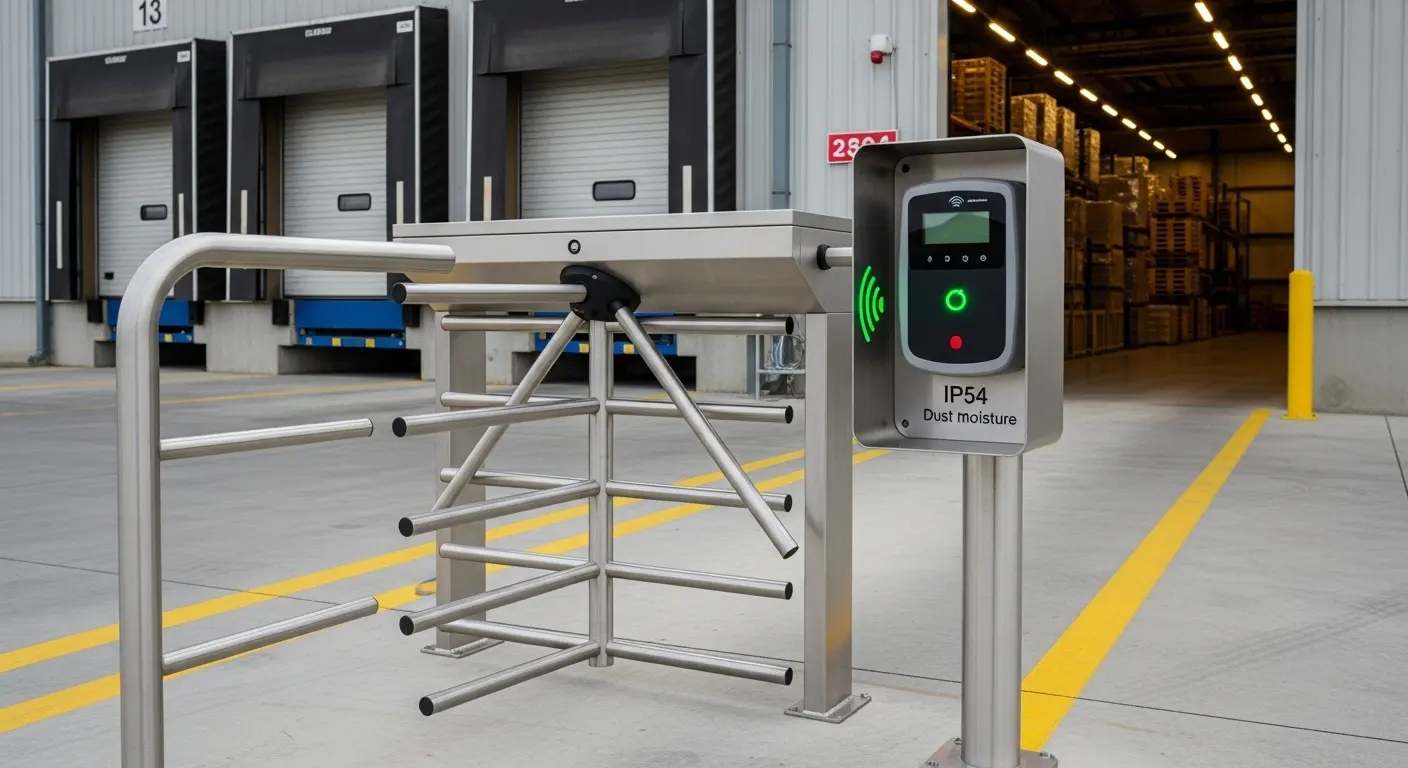
Das rechte Drehkreuz des Lagerhauses hängt von der Zugangszone ab, Die Mischung von Benutzertypen, die sie eingeben, und ob die Einrichtung betrieben wird 24/7. Robuste Dreibein-Drehkreuze bedienen die Haupteingänge des Personals und die Fußgängertore der Docks. Vollhöhen- und Kletterschutz-Drehkreuze sichern Inventarzonen und Bereiche für gebügelte Güter. IP54 ist die Mindestfreigabe für jedes Gate innerhalb 10 Meter einer offenen Docktür.
Lagerhäuser zur Verwaltung von festem Personal, Agenturarbeiter, Auftragnehmer, Und Lieferfahrer am selben Eingangstor benötigen rollenbasierte Ausweis-Logik – mit Zeitfensterbeschränkungen für Auftragnehmer und Einmalausgangsdaten für Fahrer. Für 24/7 Transaktionen, Spezifizieren Sie vor der Bestellung ein Gate mit ≥5 Millionen MCBF.
Dieser Leitfaden gibt Lagermanager, Logistik-HSE-Offiziere, und EPC-Auftragnehmern eine Gate-Typ-Vergleichstabelle, Ein Bereich für Lagerzonenabgleich, Eine Logikmatrix für Mehrbenutzerzugangsdaten, Anti-Tailgating-Richtlinien für Inventarzonen, OSHA-Konformitätskontext, und einen Pfad zu einem fabrikdirekten Zitat. Für den Ironman-Anti-Tailgating-Drehkreuz in voller Höhe, der bei Lagerlager-Inventarzonen verwendet wird, Beginnen wir mit derVollhoch-Drehkreuz-Seite gegen Tailgating.
Typen von Drehkreuzen im Lagerhaus – Vergleich nach lagerspezifischen Kriterien
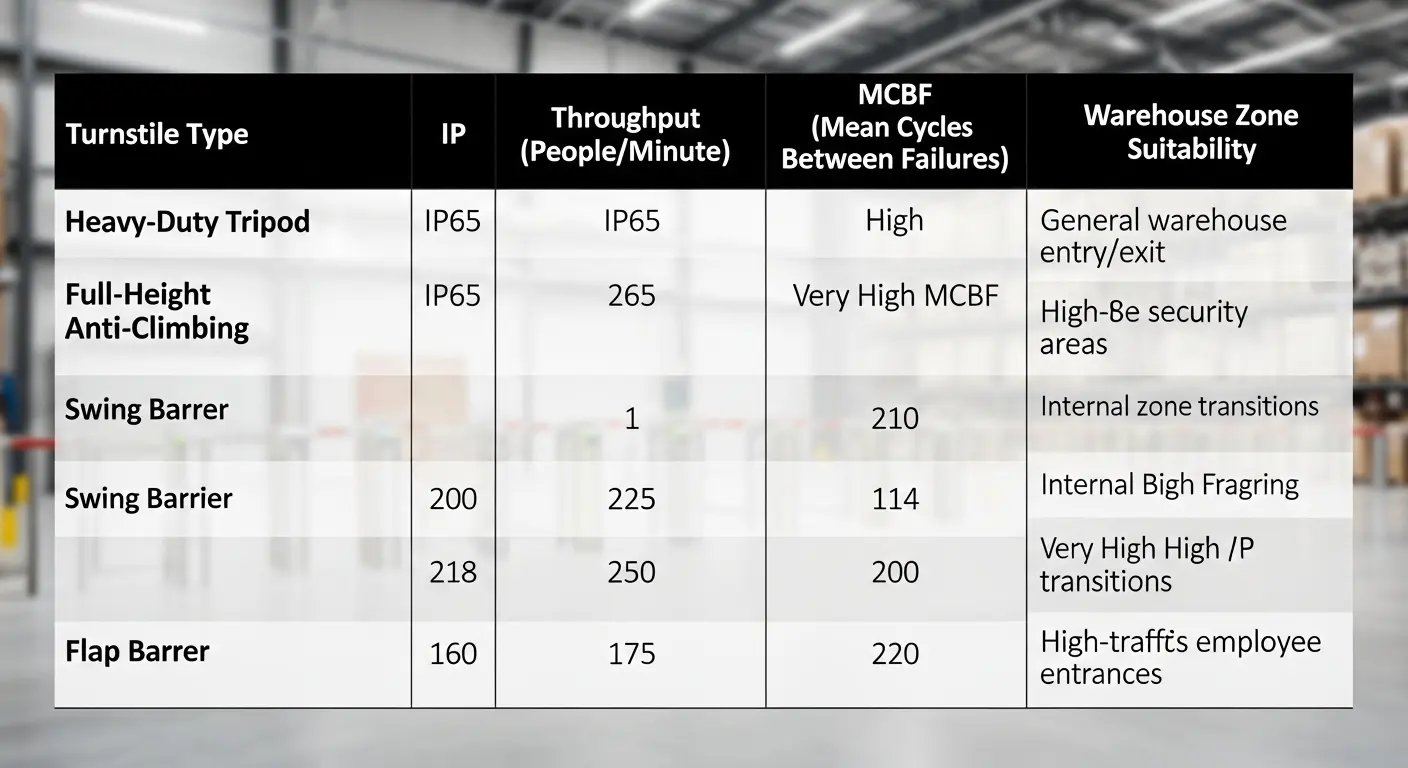
Vier Tortypen decken die Hauptzugangsanforderungen für das Lagerhaus ab. Jede passt zu unterschiedlichen Zonen und Sicherheitsstufen. Die folgende Tabelle vergleicht sie anhand der Kriterien, die für eine Lagerhausspezifikation entscheidend sind.
| Gate-Typ | Durchsatz | IP-Bewertung | MCBF | Anti-Tailgating | Anti-Klettern | Beste Lagerhauszone | Einheitsbereich |
|---|---|---|---|---|---|---|---|
| Schwerlast-Dreibein | 25–40 ppm | IP44–IP54 | ≥5M | Mechanischer Ein-pro-Zyklus | ❌ | Haupteingang des Personals, Fußgängertor am Dock | $200–1.400 Dollar |
| Drehkreuz in voller Höhe | 15–25 ppm | IP54–IP65 | ≥5M | Physischer Käfig | ✅ | Inventarzone, Umfang, Hochsicherheit | $600–4.000 Dollar |
| Anti-Kletter-Schaukel | 20–35 ppm | IP44–IP54 | ≥3M | Sensor + Alarmrelais | ✅ | Inventarzone, Gebiet für Schuldpflichtgüter | $800–3.500 Dollar |
| Klappenbarriere | 40–60 ppm | IP44–IP54 | ≥5M | Sensormatrix + Alarm | ❌ | Hochleistungs-Personaleingang, Verwaltung | $450–3.000 Dollar |
Stativ und Klappenbarriere — Eingänge für das Personal mit hohem Volumen
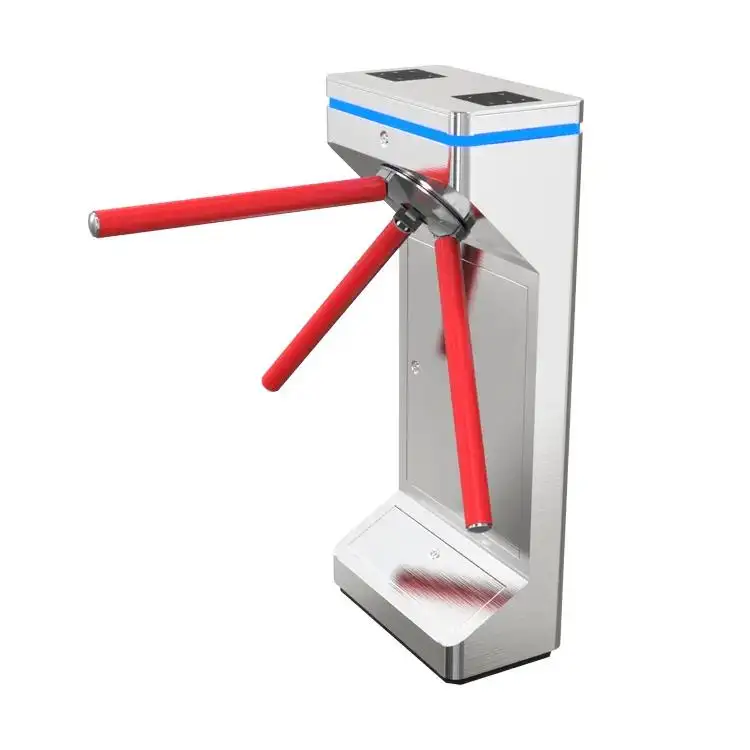
Robuste Dreibein-Drehkreuze sind das Standard-Eingangstor des Lagerpersonals. Sie verarbeiten 25–40 ppm pro Spur, überleben 24/7 Hochzyklus-Dockbereichsbedingungen bei IP54, und sich direkt mit RFID-Zeit- und Anwesenheitssystemen über Wiegand oder RS485 verbinden.
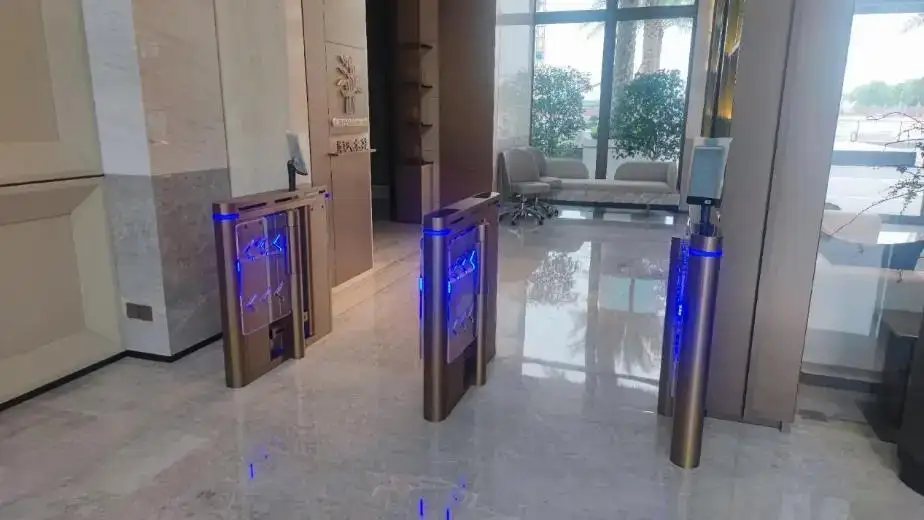
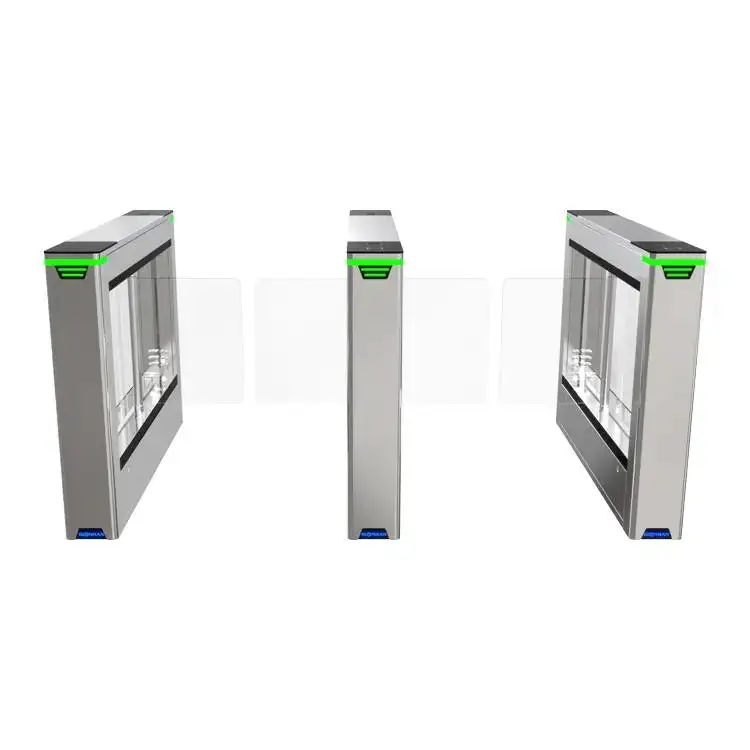
Klappenbarrieren eignen sich für Lagerverwaltungs- oder Besuchereingänge – 40–60 ppm Durchsatz und eine weniger profilierte Kabinettarbeit in der Verwaltungszone. Ihre niedrigere IP-Klassifizierung und das Design der Glaspaneele sind für stationäre oder Produktionsstationen nicht geeignet.
Volle Höhe und Anti-Klettern – Sicherheit der Inventarzone
Vollhöhen-Drehkreuze sind die korrekte Spezifikation für Lagerbestandszonentore, Bereiche mit hohem Wertstock, und Bereiche für Schuldvergütungen. Der bodentiefe Käfig erlaubt pro Betriebszyklus nur eine autorisierte Person. Das verhindert physisch Klettern oder Springen – kein Sensor ersetzt das in einer hochwertigen Stockumgebung.
Anti-Kletter-Drehkreuze kombinieren eine vollwertige Anti-Kletterbarriere mit einem sensorbasierten Anti-Tailgating-Alarm und leiten Relaisausgaben zu einer Sicherheitsarbeitsstation weiter. Sie eignen sich für Inventarzonen, in denen sowohl die physische Aufstiegsabschreckung als auch ein aktiver Alarm erforderlich sind. Für die Ironman-Produktspezifikation, Siehe dieAnti-Kletter-Drehkreuz-Seite.
Drehkreuz des Lagerhauses Gate für Zone – wo jedes Tor hingehört
Der Tortyp muss mit der Lagerzone übereinstimmen – nicht nur der Personalanzahl oder dem Budget. Die folgende Tabelle gibt eine direkte Empfehlung pro Zone.
| Lagerzone | Empfohlenes Tor | IP-Bewertung | Berechtigungsnachweis | Hauptgrund |
|---|---|---|---|---|
| Haupteingang des Personals | Robustes Stativ | IP44–IP54 | RFID-Karte | Durchsatz, T&Eine Integration, kosten |
| Fußgängertor des Docks | Robustes Stativ | IP54 min | RFID oder biometrisch | Dock-Feuchtigkeit/Staub, 24/7 |
| Inventar / Verbundene Zone | Voll-Height- oder Anti-Kletter-Schaukel | IP44–IP54 | Biometrisch oder Dualfaktor | Maximale Sicherheit, Kein Aufstieg/Tailgate |
| Verwaltung / Besuchereingang | Klappenbarriere oder Geschwindigkeitsschrank | IP42–IP44 | RFID, QR, NFC | Besuchermanagement, Durchsatz |
| Außentor | Volle Körpergröße | IP65 | RFID oder biometrisch | Physischer Umfang, wetterfest |
Haupteingang und Docktor
Der Haupteingang des Lagerhauspersonals übernimmt die Schichtwechsel-Spitze. Berechnen Sie die Spuranzahl mit dieser Formel: Gesamtzahl der Schichtarbeiter ÷ 12 Minuten ÷ Tor PPM = Spuren. Ein Lagerhaus mit 600 Arbeiter pro Schicht benötigen: 600 ÷ 12 = 50 Einträge/Minute ÷ 30 ppm = 2 Dreibeinbahnen, plus eine Notausgangsspur.
Fußgängertore am Dock erfordern mindestens IP54 – nicht IP44. Die Docktore öffnen sich während der gesamten Schicht, wodurch das Tor windgetriebenem Staub und Feuchtigkeit ausgesetzt ist. Basierend auf unserer Einsatzerfahrung in südostasiatischen Lagerstandorten, ein IP44-Dockgate fällt innerhalb von 12–18 Monaten auf Controller-Board-Ebene aus. Jedes Tor innerhalb 10 Meter einer offenen Docktür benötigen IP54 als Startspezifikation.
Inventarzonen-Tor
Inventarzonen, Bereiche mit Schuldpflichtgütern, Und hochwertige Aktienabschnitte benötigen ein Tor, das unbefugten Zugriff physisch verhindert – nicht nur erkennt. Ein Drehkreuz in voller Höhe erlaubt pro Betriebszyklus nur einen autorisierten Zugangshalter. Nach unserer Erfahrung mit Lagerbestands-Zonen-Deployments, Kunden, die an einem Inventarzonen-Tor ein Standardstativ spezifizierten, meldeten mindestens einen unbefugten Zugriffsvorfall innerhalb des ersten 90 Tage.
Für Inventarzonen, in denen die Prüfungsspur eine Compliance-Anforderung ist – Bürgschaftsgüter, Pharmazeutischer Vertrieb, Kühlkettenlogistik – Eine biometrische Qualifikation am Anti-Kletter-Drehkreuz erzeugt bei jedem Einstiegsevent einen nicht widerlegbaren Identitätsnachweis. Für die biometrische Konfiguration, die bei Hochsicherheits-Inventarzonen verwendet wird, Siehe dieBiometrische Anti-Kletter-Drehkreuz-Seite.
Verwaltung, Besucher, und Perimetertore
Lagerverwaltungs- und Besuchereingänge eignen sich für eine Klappenbarriere oder ein Geschwindigkeitsschrank. Diese Zonen haben einen geringeren Spitzendurchsatz, gelegentlicher Besucher- und Fahrerverkehr, und eine QR-Code- oder NFC-Besucherausweise erforderlich. Für die smarte Speed-Gate-Konfiguration, die an Lagerverwaltungseingängen verwendet wird, Siehe dieProduktseite für Smart Speed Gate-Drehkreuz.
Außentore erfordern Drehkreuze in voller Höhe bei IP65. Für eine vollständige Außenaufnahme in hochfeuchtigen oder küstennahen Lagerhäusern sind außerdem 316-Edelstahlschränke erforderlich, um Korrosion über die Lebensdauer des Tores zu verhindern.
Verwaltung mehrerer Benutzertypen an einem Drehkreuz des Lagers
Die meisten Lagerhäuser betreiben vier verschiedene Benutzerkategorien durch dasselbe Eingangstor. Jede Kategorie benötigt unterschiedliche Zugangszonen, Verschiedene Zeitfenster, und eine andere Audit-Trail-Anforderung – alles vom gleichen Zugangskontrollpanel aus verwaltet, ohne ein separates Tor pro Benutzertyp.
| Benutzertyp | Berechtigungsnachweis | Zugangszonen | Zeitfenster | Prüfpfad |
|---|---|---|---|---|
| Festangestelltes Personal | RFID-Karte (Wiegand 34-bit) | Alle Zonen pro Schichtzuweisung | Schichtzeiten | T&Ein System – automatisch |
| Agenturarbeiter | RFID-Karte (vorübergehend) | Haupteingang + Zonenspezifisch | Nur Schichtstunden | T&Ein System – automatisch |
| Auftragnehmer | RFID-Karte oder biometrische Karte | Nur festgelegte Zonen | Nur tagsüber | Sicherheitsprotokoll – verpflichtend |
| Lieferfahrer | QR-Code oder RFID-Besucherpass | Nur Dockzone | Terminfenster | Sicherheitsprotokoll – automatisch oder manuell |
Basierend auf unseren Verteilungszentren, Der häufigste Fehler bei der Konfiguration der Zugangsdaten ist, Auftragnehmern bei der Inbetriebnahme uneingeschränkten Zeitfensterzugriff zu gewähren. Eine Auftragnehmerqualifikation beschränkt auf 08:00–18:00 Montag bis Freitag – konfiguriert im Zugangskontrollpanel bei der Einrichtung – verhindert den Zugang zu Inventarzonen außerhalb der regulären Zeiten ohne manuelles Eingreifen.
Für Lagerhäuser, die hohe tägliche Fahrervolumina verwalten, QR-Code-Zugangsdaten beseitigen die Kartenverwaltung vollständig. Das Logistik-WMS erzeugt einen einmaligen QR-Code, schickt es an das Handy des Fahrers, und das Tor validiert sie bei Ankunft. Für das AB-Eingangstorsystem, das in kontrollierten Mehrbenutzer-Lagerkonfigurationen verwendet wird, Siehe dieAB-Eingangstorsystem-Seite.
Anti-Tailgating in Drehkreuztoren des Lagerhauses
Anti-Tailgating ist eine Anforderung zur Lagerhausverlustprävention – kein generisches Sicherheitsupgrade. Lagerzonen-Tore, die Tailgating erlauben, schaffen eine Bestandsexposition, die kein CCTV-System nachträglich schließt.
| Anti-Tailgating-Funktion | Stativ | Volle Körpergröße | Anti-Kletter-Schaukel | Klappenbarriere |
|---|---|---|---|---|
| Mechanischer Ein-pro-Zyklus | ✅ | ✅ | ✅ | ❌ |
| Infrarotsensormatrix | Wahlfrei | Wahlfrei | ✅ Standard | ✅ Standard |
| Alarmrelais zur Arbeitsstation | Wahlfrei | Wahlfrei | ✅ Standard | ✅ Standard |
| Anti-Kletter-Abschreckung | ❌ | ✅ | ✅ | ❌ |
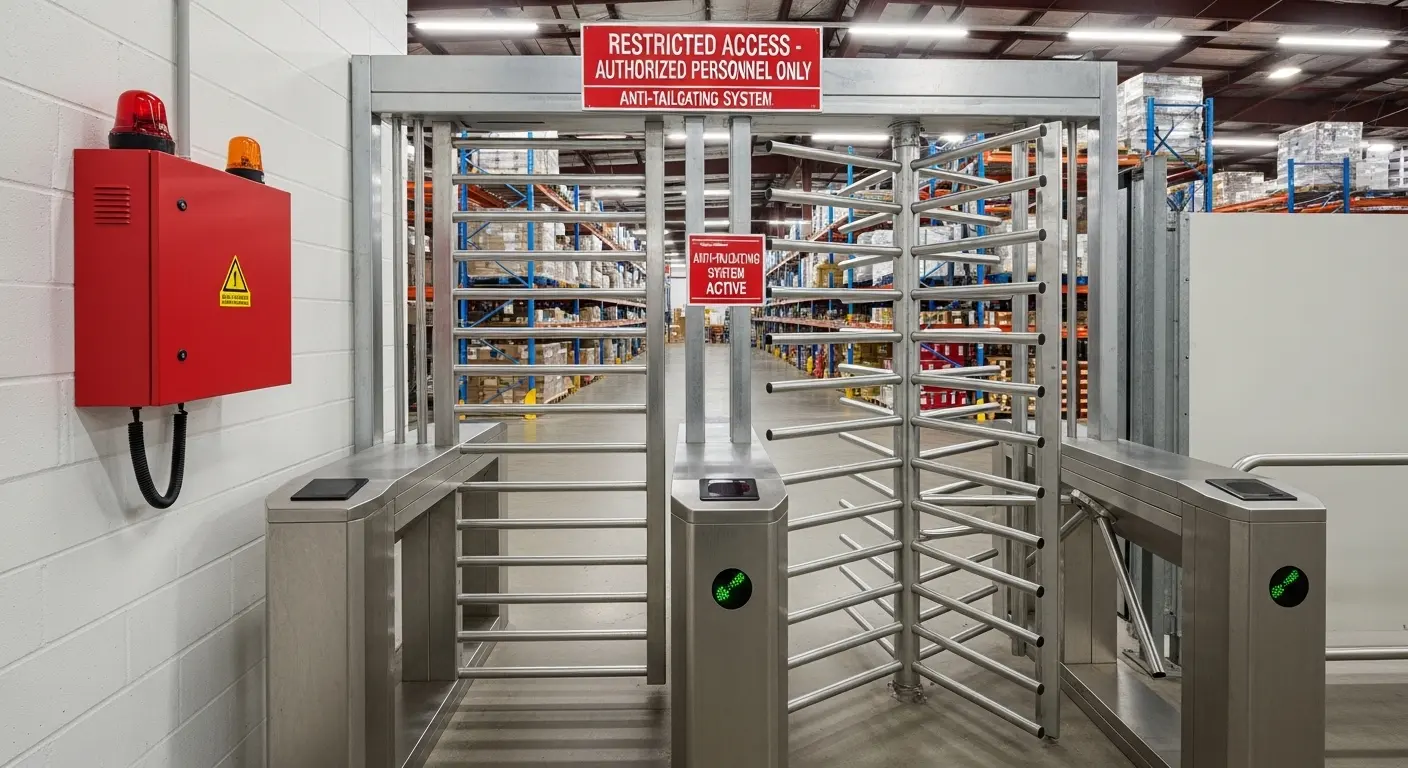
Der EisenmannAnti-tailgating-Drehkreuz in voller Höhe kombiniert die physische Käfigbarriere mit einer Sensormatrix, die bei jeder Second-Body-Erkennung einen Alarm auslöst, bevor der Käfig seinen Zyklus abschließt. Jeder unbefugte Zugriffsversuch erzeugt ein zeitgestempeltes Ereignis im Sicherheitsprotokoll – entscheidend für die Nachuntersuchung nach dem Vorfall in gebondeten oder hochwertigen Aktiengebieten.
Volle Höhe und Anti-Kletter-Tore machen das Tailgating an Inventarzonen physisch unmöglich. Die Spezifikation eines Anti-Tailgating-Sensorsystems auf einem Standard-Stativ in einer Inventarzone ist eine reaktive Konfiguration. Der Beginn mit einem physischen Barrieretor ist eine präventive Lösung.
OSHA-Konformität und Platzierung von Drehkreuzen im Lagerhaus
OSHA 29 VGL 1910.178 erfordert das angetriebene Industriefahrzeug (Gabelstapler) und Fußgänger werden in Lagerbetriebsbereichen getrennt. Ein Drehkreuztor für Lagerhäuser an einer Fußgängerstelle, die die erforderliche physische Trennung zwischen dem Fußgängereingang und der Gabelstaplerzone schafft.
Drei OSHA-Konformitätspunkte für die Positionierung des Drehkreuzes im Lagerhaus:
- Das Fußgängertor muss physisch von der Gabelstaplerspur getrennt sein – eine gemeinsame Öffnung erfüllt nicht die Trennungsanforderung
- Das Tor muss bei einem Feueralarm oder Stromausfall im Fail-Safe-Modus funktionieren – laut NFPA 101, Die Barriere lässt sich im Notfall auf dem Ausstiegsweg einziehen und bleibt offen
- Jedes Fußgängertor, das an einen Gabelstaplerbetrieb angrenzt, darf die Fluchtwegbreite nicht unter die minimale Ausstiegsfreiheit verringern
Für britische Lagerhäuser, der Arbeitsplatz (Gesundheit, Sicherheit und Wohlergehen) Vorschriften 1992 Setze gleichwertige Anforderungen an die Trennung zwischen Fußgängern und Fahrzeugen. Das Spezifikationsprinzip ist identisch – ein spezielles Fußgängertor mit einer physischen Barriere am Einstiegspunkt zu jeder Gabelstapler-Betriebszone.
WMS und Zeit- und Anwesenheitsintegration für Drehkreuze im Lagerhaus
Ein Lagerdrehkreuz ist ein Anwesenheitsterminal bei den meisten Logistikeinsätzen. Jede Nachweisvalidierung – Mitarbeiter-ID, Zeitstempel, Gate-Nummer, Zugangszone – schreibt auf das T&Ein oder WMS-System in Echtzeit.
| Integrationstyp | Protokoll | Berechtigungsnachweis | Beste Lagernutzung |
|---|---|---|---|
| Standard T&Ein Terminal | Wiegand 26/34-bit | RFID-Karte | Festangestelltes Personal, Agenturarbeiter |
| Cloud T&A / WMS | TCP/IP / Ethernet | RFID, QR, NFC | Mehrfachstandort-3PL, Elektronischer Handel |
| On-premise ERP/WMS | RS485 | RFID, biometrisch | Bonded Warehouse, Regulierte Verteilung |
| Biometrisches T&A | Wiegand oder TCP/IP | Fingerabdruck, Gesicht | Hochsicherheits-Inventarzonen |
Für die biometrische Fingerabdruckkonfiguration, die im Warehouse T verwendet wird&A- und Inventarzugangszonen-Deployments, Siehe dieSeite zum Fingerabdruck-Drehkreuz-Tor Und dieBiometrisches Fußgänger-Zugangstor mit Fingerabdruckscanner Seite.
Für Logistikbetreiber mit mehreren Standorten, Die TCP/IP-Cloud-Integration ermöglicht die Bereitstellung von Zugangsdaten, Änderungen der Zugangsrechte, und Audit-Trail-Zugang über alle Lagerstandorte von einer Plattform aus – ohne einen Besuch pro Gate-Änderung.
Ein Werksangebot für Ihr Drehkreuztor im Lagerhaus einholen
Vier Punkte reichen für ein vollständiges, detailliertes Werksangebot in 12 Geschäftszeiten.
- Kartiere deine Lagerhauszonen: Haupteingang / Docktor / Inventarzone / Verwaltung / Außenperimeter – beachten Sie den Tortyp und die pro Zone erforderliche IP-Klassifizierung
- Listen Sie Ihre Benutzertypen auf: Ständige Mitarbeiterzahl, Größe der Agenturrotation, Auftragnehmerfrequenz, Treibervolumen — Bestätigen Sie die Zugangsdaten und erforderlichen Zeitfensterbeschränkungen
- Bestätigen Sie die Betriebszeiten: 24/7 Lagerhäuser verlangen mindestens ≥5 Millionen MCBF – bestätigen Sie dies vor der Bestellung
- Reichen Sie Ihre Projektbeschreibung ein: kontaktieren Sie das Ironman-Team – erhalten Sie ein werksdirektes, detailliertes Angebot im Sortiment 12 Geschäftszeiten, mit CE, ISO9001, FCC, und RoHS-Zertifizierungsdokumente beim ersten Kontakt
Häufig gestellte Fragen
F1: Welche Art von Drehkreuz eignet sich am besten für einen Lagerhauseingang?
Für einen Haupteingang des Lagerhauses, Ein robustes Dreibein-Drehkreuz ist die Standardausstattung – 25–40 ppm pro Spur, IP44–IP54 für Dock-angrenzende Positionen, und eine direkte Wiegan- oder RS485-Verbindung zum RFID-Zeit- und Anwesenheitssystem der Anlage. Für Lagerbestandszonen-Gates und Bonded Goods-Bereiche, Ein Drehkreuz in voller Höhe oder ein Kletterschutz-Drehkreuz ist die richtige Wahl – die physische Barriere verhindert Klettern und Tailgating, sodass ein Stativ nicht an einer wertvollen Standardposition anhalten kann. Für den Verwaltungs- oder Besuchereingang, Eine Klappenbarriere oder ein Speed Gate deckt geringere Durchsatz- und Besucherausgangsanforderungen.
F2: Wie verwaltet man verschiedene Benutzertypen mit einem einzigen Lager-Drehkreuz-Gate??
Die rollenbasierte Zugangs-Logik im Zugriffskontrollpanel verwaltet alle vier Warehouse-Benutzertypen von einem einzigen Gate aus. Festangestellte Mitarbeiter erhalten RFID-Karten mit Zugang zu Schichtzeiten in ihren zugewiesenen Zonen. Agenturangestellte erhalten temporäre RFID-Karten, deren Schichtzugang auf ihre Arbeitsbereiche beschränkt ist. Auftragnehmer erhalten RFID-Karten, die auf bestimmte Zonen und nur tagsüber verfügbare Zeitfenster beschränkt sind – die bei Inbetriebnahme konfiguriert sind, nicht jede Schicht manuell verwaltet. Lieferfahrer erhalten Einweg-QR-Codes, die nur für ihr Terminfenster in der Dockzone gültig sind. Basierend auf unseren Verteilungszentren, Die Konfiguration von Zeitfensterbeschränkungen in der Inbetriebnahmephase eliminiert die häufigste Exposition außerhalb der regulären Arbeitszeiten ohne laufende manuelle Belastung.
F3: Braucht ein Drehkreuz im Lagerhafenbereich IP54 oder IP65??
IP54 ist die Mindestfreigabe für jedes Lagertor innerhalb 10 Meter einer offenen Docktür. IP54 schützt Staubschutz und Spritzwasserschutz – notwendig, da Docktüren während der Schichten geöffnet und geschlossen werden, wodurch das Tor windgetriebenem Staub und Feuchtigkeit ausgesetzt ist. IP65 ist nur für vollständig im Garten liegende Lagerhaus-Tore ohne Überkopfabdeckung erforderlich.. Für IEC 60529, die erste IP-Ziffer deckt den Staubschutz ab, die zweite die Feuchtigkeitsbeständigkeit – IP54 bedeutet staubgeschützt und spritzresistent. Die Spezifizierung von IP44 für ein dockangrenzendes Lagertor führt in hochfeuchten Klimazonen typischerweise innerhalb von 12–18 Monaten zu einem Ausfall der Steuerplatine innerhalb von 12–18 Monaten.
F4: Was ist Anti-Tailgating in einem Drehkreuz eines Lagerhauses?
Anti-Tailgating in einem Drehkreuz im Lagerhaus ist eine Funktion, die verhindert, dass eine zweite unbefugte Person im selben Torzyklus hinter einem autorisierten Zugangsbesitzer eintritt. Mechanisches Anti-Tailgating – vorhanden bei Stativ- und vollhohen Toren – ersetzt pro Zyklus eine Person durch das physische Barrierendesign. Sensorbasiertes Anti-Tailgating – Standard bei Kletterschutz-Drehkreuzen und Klappenbarrieren – verwendet eine Infrarot-Sensormatrix quer über die Fahrspur. Es erkennt einen zweiten Körper, der eintritt, bevor die Barriere zurückgesetzt wird, und löst einen hörbaren Alarm aus, Visueller Alarm, und optional eine Ausgabe an eine Sicherheitsworkstation oder Cloud-Plattform weiterleiten. Für Lagerbestandszonen und Bereiche für Bong-Güter, Mechanisches Anti-Tailgating aus voller Höhe oder Anti-Kletter-Gate ist die zuverlässigere Spezifikation – sie hängt nicht von der Sensorausrichtung oder Empfindlichkeitskalibrierung ab.
F5: Für welches MCBF sollte ein Drehkreuz eines Lagerhauses verwendet werden 24/7 Operation?
Für 24/7 Lagerbetrieb, Spezifizieren Sie einen Mindest-MCBF (mittlere Zyklen zwischen Ausfällen) von 5 Millionen Zyklen pro Spur. Mit einem Durchsatz von 30 PPM mit einem 12-Stunden-Betriebstag, Ein einzelnes Lagertor zirkuliert ungefähr 21,600 Zeiten pro Tag — bis 1 Millionen Zyklen unter 50 Tage. Ein Gate mit nur 1–2 Millionen MCBF muss innerhalb von 3–6 Monaten überholt werden 24/7 Lagerhaus. Das 5 die million MCBF-Spezifikation – serienmäßig bei Drehkreuzen mit schweren Stativen und vollen Drehkreuzen von etablierten OEM-Herstellern – sieht bei Standard ein Dienstintervall von 6–12 Monaten vor 24/7 Betriebsraten im Lagerhaus.
F6: Müssen Drehkreuztore für Lagerhäuser den OSHA-Gabelstapler-/Fußgängerregeln entsprechen?
Ja. OSHA 29 VGL 1910.178 erfordert eine physische Trennung zwischen angetriebenen Industriefahrzeugen (Gabelstapler) und Fußgänger in den Betriebsbereichen von Lagerhäusern. Ein Drehkreuztor für Lagerhäuser an einer Fußgängerstelle-Dockstelle sorgt für die erforderliche physische Trennung – der Fußgänger betritt das Drehkreuz; Der Gabelstapler verwendet eine separate Fahrzeugöffnung. Das Tor muss laut NFPA außerdem im Fail-Safe-Modus funktionieren 101 — die Barriere zieht sich ein und bleibt bei einem Brandalarm oder Stromausfall offen, Der Fußgängerausgang bleibt für die Evakuierung frei. Jedes Lager im Vereinigten Königreich muss die entsprechenden Anforderungen des Arbeitsplatzes erfüllen (Gesundheit, Sicherheit und Wohlergehen) Vorschriften 1992.
Drei Entscheidungen, die die Spezifikation Ihres Drehkreuztors im Lagerhaus definieren
Zonenangepasste Tortypauswahl, Mehrbenutzerzugangs-Logik bei der Inbetriebnahme konfiguriert, und IP54 für jede dockangrenzende Torposition – diese drei Entscheidungen bestimmen, ob dein Lagerhaus-Drehkreuz-Torsystem über die gesamte Leistung erbringt 24/7 Betriebszyklus, Vom ersten Schichtwechsel zum Wartungsintervall im fünften Jahr.
Ironman stellt werksnahe Drehkreuze für Lagerhäuser für die Logistik her, Erfüllung, Kühllagerung, Verpflichtete Güter, und 3PL-Einrichtungen im gesamten Bereich 50+ Länder. Reichen Sie Ihre Lagerhaus-Zonenkarte ein, Benutzertypliste, und Schichtplan über dieVollhoch-Drehkreuz-Seite gegen Tailgating Für ein vollständiges, werksdirektes Einzelangebot innerhalb 12 Geschäftszeiten.
