


Flughafen-Drehkreuz-Tor: Arten, Funktionen und wie man die richtige Wahl auswählt
2026-04-05


EinFlughafen-Drehkreuz-Tor ist nicht nur eine Barriere. Es ist die erste und letzte Zugangskontrolle zwischen Ihrem Terminal und Ihren Passagieren. Mach es richtig, und Tausende von Reisenden bewegen sich in wenigen Minuten ohne Reibung durch die Boarding-Zonen. Mach es falsch, und du stehst auf Warteschlangen, Sicherheitslücken, und betriebliche Ausfälle, die sich über dein gesamtes Terminal ausbreiten. Dieser Leitfaden behandelt alle Arten vonFlughafen-Drehkreuz-Tor Verfügbar, Welche Merkmale tatsächlich zählen, und wie man das richtige Gate an jede Zone innerhalb Ihres Flughafens zuordnet.
Was ist ein Flughafen-Drehkreuz-Tor?
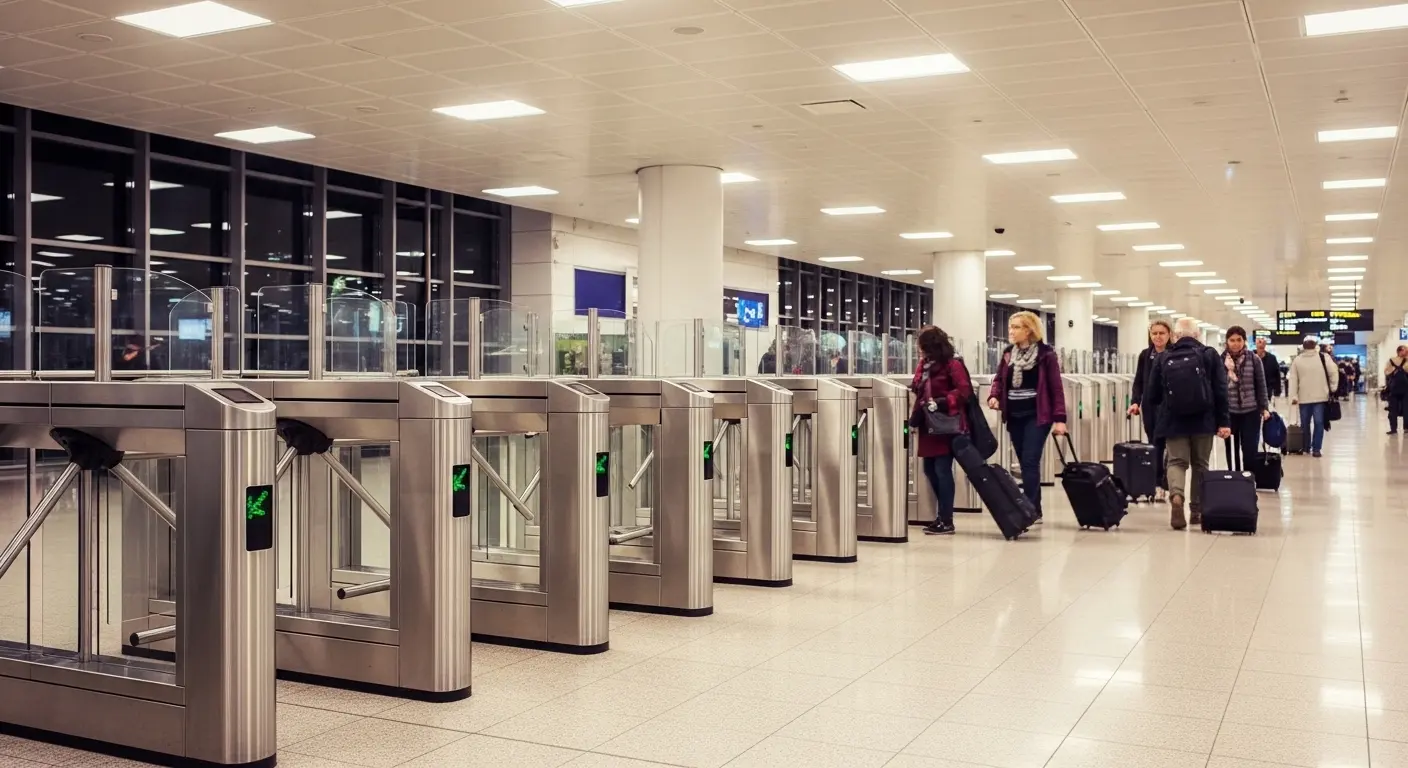
EinFlughafen-Drehkreuz-Tor ist eine motorisierte Fußgängerbarriere, die speziell für stark frequentierte Flughafenumgebungen gebaut wurde. Es steht an Sicherheitskontrollen, Einstiegsstraßen, Ankunftshallen, Einwanderungskorridore, und nur für das Personal zugängliche Zonen. Seine Aufgabe ist es, die Zugangsdaten zu überprüfen und nur autorisierte Personen durchzulassen, Einer nach dem anderen, bei Geschwindigkeit.
Im Gegensatz zu Toren, die in Bürogebäuden verwendet werden, Eine Flughafenversion muss Tausende von Passagieren pro Stunde abwickeln. Tatsächlich, Große internationale Flughäfen verarbeiten täglich Hunderttausende von Passagieren an allen aktiven Terminals. Diese Art von Belastung erfordert, dass die Gates direkt mit den Departure Control Systems der Fluggesellschaft verbunden sind (DCS), Einwanderungsdatenbanken, und biometrische Identitätsplattformen. Dieses Maß an Systemkonnektivität unterscheidet eine wahreFlughafen-Drehkreuz-Tor von einer Standard-Fußgängerbarriere.
Jede Zone innerhalb eines Flughafens hat zudem unterschiedliche Durchsatzanforderungen. Zum Beispiel, Ein Boarding-Gate benötigt eine schnelle Klappenbarriere. Ein Einwanderungskorridor benötigt möglicherweise biometrische eGates. Ein Wartungszugangsbereich benötigt eine vollwertige Perimeterbarriere. Ein Gate-Typ deckt nicht alle Anwendungsfälle ab.
Warum Flughafenumgebungen speziell gebaute Gates benötigen
Standard-Gewerbetore sind für 9-bis-5-Verkehr gebaut. Betriebene Flughäfen 24/7. Die Fahrgastzahlen steigen während der Abflugfenster stark an, Ankunftsspitzen, und Flugunterbrechungen. Tatsächlich, Ein einzelner mittelgroßer internationaler Flughafen kann darüber hinaussehen 800,000 Fahrgäste pro Tag an allen Terminals.
Erste, Flughäfen verlangen eine hohe Durchsatzrate, Bedeutung 30 oder mehr Personen pro Minute an den Einstiegszonen. Nächste, Sie benötigen nahezu keine Ausfallzeit, Weil ein defektes Gate an einer Einstiegsspur unmittelbare Probleme mit dem Fahrgastmanagement verursacht. Endlich, Flughafen-Gates müssen unterschiedliche Passagierprofile verarbeiten: Familien mit Kinderwagen, Ältere Reisende, Rollstuhlfahrer, und Menschen, die übergroßes Kabinengepäck trugen,.
Infolgedessen, Ein eigens gebauterFlughafen-Schnellgatensystem ist die einzige verlässliche Wahl für Boarding- und Ankunftsumgebungen. Generische kommerzielle Drehkreuze können diese kombinierten Anforderungen nicht erfüllen, und der Unterschied wird innerhalb der ersten Hauptverkehrszeit deutlich.
Arten von Flughafen-Drehkreuz-Gate-Systemen
Die Wahl des richtigen Typs beginnt damit, zu verstehen, wo das Gate installiert wird und welches Fahrgastprofil es bedient.
Klappenbarriere: Der Boarding-Gate-Standard
Die Klappenbarriere ist die am weitesten verbreiteteFlughafen-Drehkreuz-Tor Typ in Bordbereichen und Abflughallen. Seine einziehbaren Paneele öffnen sich in weniger als einer halben Sekunde und schließen sich genauso schnell. Der Durchsatz erreicht typischerweise 30 An 45 Personen pro Minute und Spur, Ideal für enge Abflugfenster, in denen jede Sekunde zählt.
Klappenbarrieren unterstützen breite Fahrspurkonfigurationen, von 550 mm auf 900 mm, so können Passagiere mit Handgepäck durchgehen, ohne sich seitlich umzudrehen. Die meisten Modelle verfügen über Mehrstrahl-Infrarot-Arrays, die Tailgating erkennen, unvollständiger Abschnitt, und Reverse-Entry-Versuche. Für Boarding-Lanes, die sowohl Barcode-Scan- als auch QR-Code-Unterstützung benötigen, dieBarcode-Drehkreuz-Tor verwaltet sowohl 1D- als auch 2D-Bordkartenformate, Jeder Fahrgast wurde in weniger als zwei Sekunden freigegeben.
Speed Gate / Optischer Drehkreuz
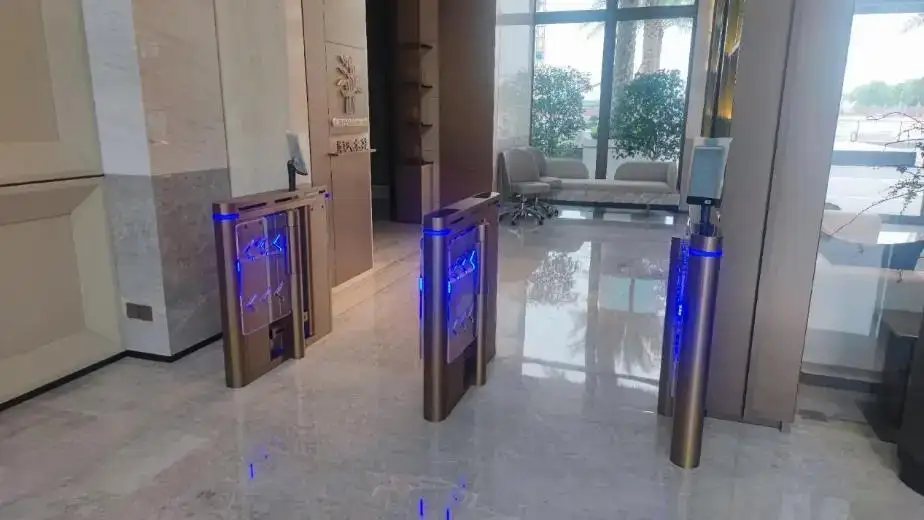
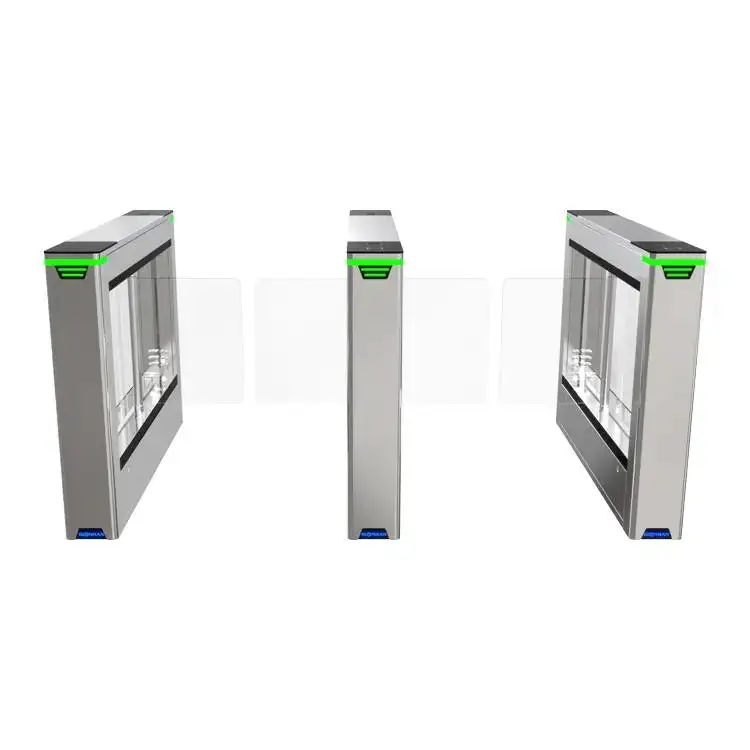
Speed Gates verwenden einziehbare Glas- oder Acrylplatten und arbeiten mit sehr hohen Durchsatzraten, oft überschreiten sie 40 Personen pro Minute. Sie werden häufig in Ankunftshallen eingesetzt, VIP-Lounges, und Premium-Terminalzonen, in denen saubere Ästhetik neben physischer Zugangskontrolle wichtig ist.
DasGlas-Schiebetor-Drehkreuz passt gut zu diesen Umgebungen. Sie kombiniert 8 Paare von Infrarotdetektoren, Gehärtete Glasscheiben, und bidirektionale Autorisierung in einem Formfaktor, der zur modernen Terminalarchitektur passt, ohne industriell zu wirken. Speed Gates unterstützen außerdem Spurbreiten bis zu 914 mm, die Fahrgäste mit Mobilitätshilfen aufnehmen kann, Gepäckwagen, und Kinderwagen ohne Spurwechsel.
Drehkreuz des Schwenktors
Schwenktore bieten die breitesten Durchgangsmöglichkeiten aller Barrierentypen und spielen eine Schlüsselrolle bei ADA-konformen und barrierefreien Fahrspuren. Die meisten Flughäfen installieren ein Schwenktor neben den Standard-Klappensperrreihen. Diese Einrichtung bedient Rollstuhlfahrer und übergroßes Gepäck, ohne den allgemeinen Fahrgastfluss in den angrenzenden Fahrspuren zu stören.
Dasbidirektionales Schwenktor kann zweidirekten Verkehr bedienen. Praktisch, Dies ist nützlich in Zonen, in denen der ein- und ausgehende Passagierstrom tagsüber über verschiedene Flugphasen hinweg abwechselt.
Hüfthöhe-Drehkreuztor
Für Flughafenzonen mit niedrigerer Sicherheitsstufe, wie allgemeine Check-in-Lobbybereiche, Personal-Speiseräume, oder Landside-Parkzugänge, aHüfthöhe Drehkreuztor bietet grundlegendes Zugriffsmanagement zu praktischen Kosten. Diese werden an gesicherten Einstiegsstellen nicht eingesetzt, Aber sie spielen eine echte Rolle bei der umfassenderen Kontrolle von Flughafenanlagen in nicht gesicherten Gebieten.
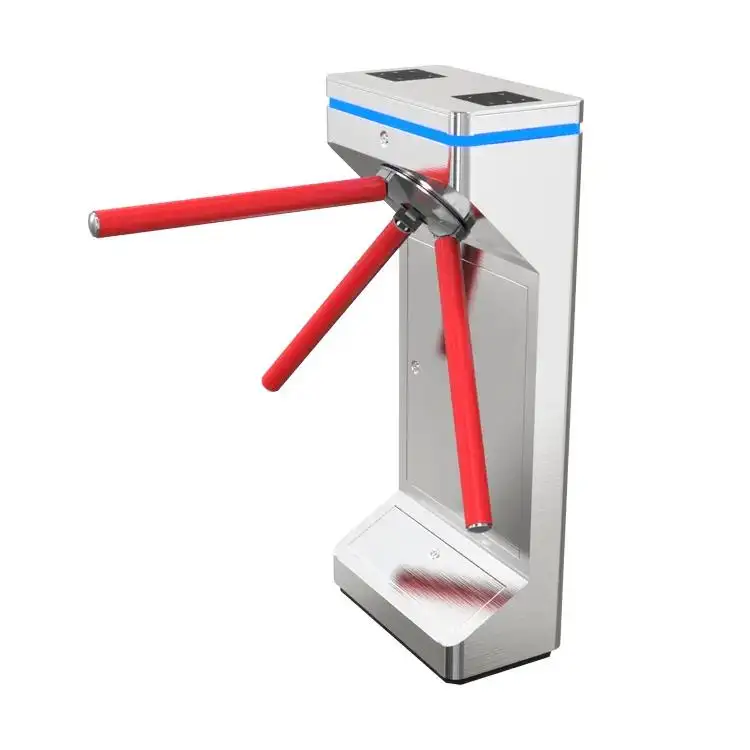
Vollwertiges Drehkreuztor
Modelle in voller Höhe reichen von Boden bis zur Decke und werden in den empfindlichsten Flughafenzonen eingesetzt: Frachtabfertigungsbereiche, Korridorpflege, Eingeschränkte Personalzonen, und Perimeter-Zugangspunkte. Ihre physische Struktur verhindert, dass man drüber klettert oder darunter duckt, was reine Elektroniksysteme einfach nicht garantieren können.
DasAnti-Tailgating-Drehkreuz in voller Höhe speziell für diese Umgebungen gebaut. Er kombiniert Industriestahlkonstruktion mit elektronischer Verriegelung und ausfallsicherem Betrieb, was sie zur richtigen Wahl für jedes Gebiet macht, in dem unbefugter Zugriff ein ernsthaftes operatives Risiko birgt.
Wichtige Merkmale, auf die Sie bei einem Flughafen-Drehkreuz-Gate achten sollten
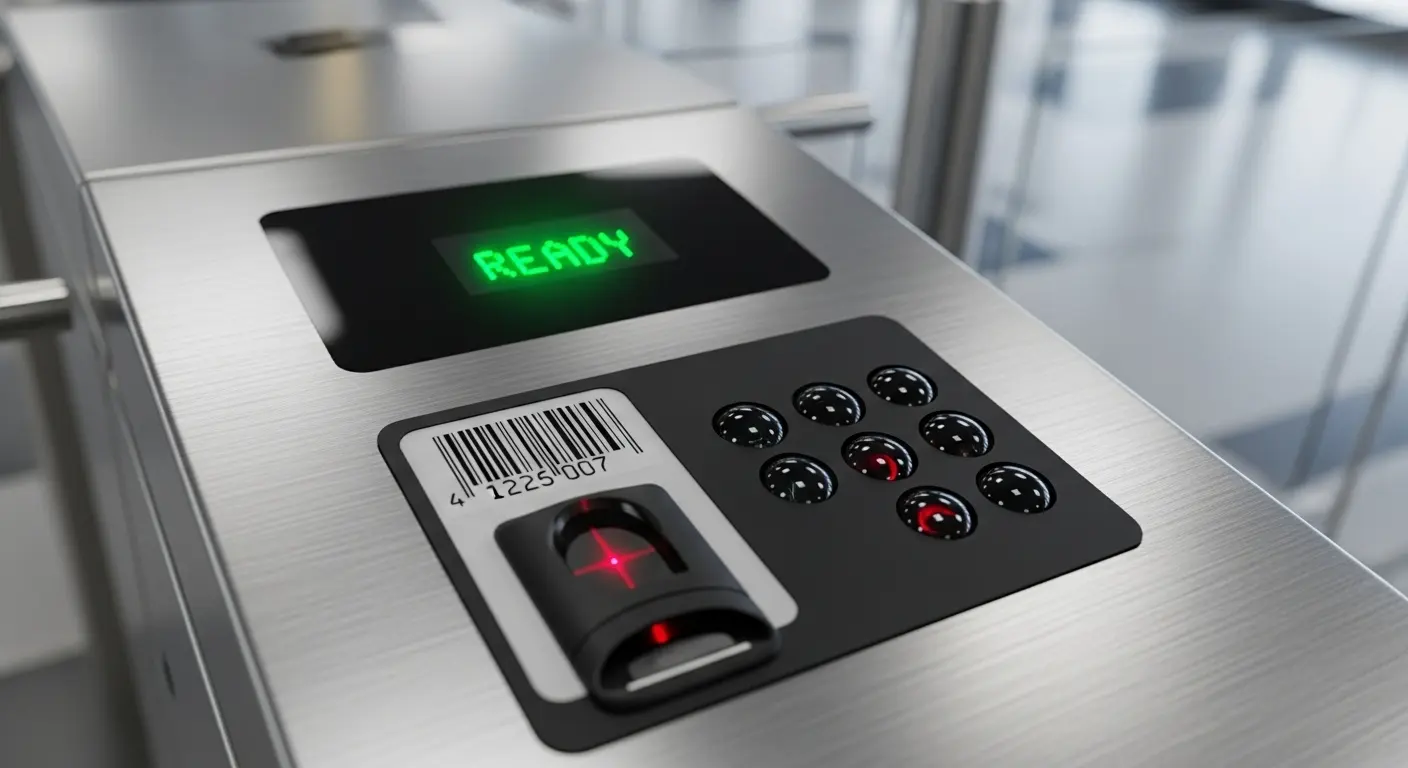
Bei der Bewertung einesFlughafen-Drehkreuz-Tor, Diese verfügen über getrennte Flughafenqualitätsprodukte von Standardbarrieren für den kommerziellen Verkehr.
Durchsatzgeschwindigkeit
Für Boarding-Gate-Anwendungen, Achten Sie auf eine Mindestbestehensquote von 30 Personen pro Minute. Klappenbarrieren und Geschwindigkeitsschutzgitter führen in dieser Kategorie durchgehend an, mit Spitzenmodellen 45 Personen pro Minute und Spur.
Anti-Tailgating-Erkennung
Die Durchsetzung von Einzelpersonenpassagen ist in jeder gesicherten Flughafenzone nicht verhandelbar. Die besten Systeme verwenden Mehrzonen-Infrarot-Arrays anstelle von Einzelstrahlsensoren. DasAB-Drehkreuz gegen Tailgating Nutzt Infrarot-Detektion mit zwei Zonen, um Nahverfolgungsversuche und erzwungene Einzeleinflüsse zu markieren, bevor sie den Kontrollpunkt durchbrechen.
Notfallsicherer Betrieb
Bei jedem Stromausfall oder Brandalarm, Tore müssen standardmäßig automatisch geöffnet werden. Suchen Sie nach Batterie-Backup, Notfallfreigabe, und ausfallsichere, standardoffene Konfigurationen als Standardfunktionen, Keine optionalen Upgrades.
Optionen für Spurbreite
Flughafenpassagiere tragen Gepäck. Eine Durchgangsbreite von 550 mm ist das absolute Minimum für jede Fahrspur mit Sitzbegleitung. Hochbefahrene Zonen und barrierefreie Fahrspuren sollten 800 mm bis 900 mm festlegen, um Engpässe zu Stoßzeiten zu vermeiden..
Lärmpegel
Gleichstrom-bürstenlose Motoren laufen leise und sind in stark frequentierten Terminalumgebungen unerlässlich. Gate-Lärm verstärkt den Stress der Fahrgäste während der Stoßzeiten und wirft ein schlechtes Licht auf das Terminalerlebnis zurück.
Zertifizierungen
Mindestens, Suche nach CE, FCC, ISO9001, und ROHS-Zertifizierungen. Diese bestätigen, dass das Gatter die Anforderungen an elektromagnetische Kompatibilität erfüllt, Sicherheitsstandards, sowie Qualitätsmanagement-Benchmarks, die für kritische Flughafeninfrastruktur geeignet sind.
Intelligente Technologie: Womit moderne Flughafen-Drehkreuz-Tore verbunden sind
Die Lücke zwischen einer grundlegenden Barriere und einer wahrenFlughafen-Drehkreuz-Tor Das System kommt darauf an, womit es verbunden ist. Moderne Flughafen-Einrichtungen integrieren Gates in ein breiteres Technologie-Ökosystem, nicht als eigenständige Hardware.
Barcode- und QR-Code-Boarding-Pass-Scannen
Fahrgäste scannen die Bordkarten an der Spur. Das Tor liest die Berechtigung, überprüft sie mit der DCS-Datenbank, und öffnet sich. DasBarcode-Drehkreuz-Tor unterstützt sowohl 1D-Barcode- als auch 2D-QR-Code-Formate, Jeder Fahrgast wurde in weniger als zwei Sekunden freigegeben, was entscheidend ist, um den Spurrhythmus während der Boarding-Fenster aufrechtzuerhalten.
Biometrische Verifikation
Gesichtserkennung, Fingerabdruckleser, Irisscanner, und Palmvenenleser können direkt an Gate-Schränken montiert werden. Für Einreisewege und Hochsicherheits-Boarding, Die biometrische Verifikation überprüft die Identität in Echtzeit mit Reisedokumentendatenbanken. Dadurch entfällt die Abhängigkeit von physischen Dokumenten und die Bearbeitung pro Passagier erheblich beschleunigt wird.
Cloud-basiertes Gate-Management
ACloud-basiertes Drehkreuz Verbindung zu einer zentralen Verwaltungsplattform über ein privates Netzwerk. Flughafenbetreiber können dann den Gate-Status überwachen, Änderungen der Push-Zugriffsberechtigung, und detaillierte Durchgangsprotokolle von einem einzigen Dashboard zu ziehen. Dies funktioniert über mehrere Terminals oder mehrere Flughafenstandorte von einer Schnittstelle aus.
RFID- und Smartcard-Zugang für das Personal
Mitarbeiter-Drehkreuzspuren laufen typischerweise mit RFID-Zugangsdaten. Die Verbindung von Gates mit HR-Systemen bedeutet, dass die Zugriffsrechte automatisch aktualisiert werden, wenn ein Mitarbeiter die Rolle wechselt oder verlässt. Praktisch, Dies schließt die Credentialing-Lücke, die Sicherheitslücken in großen Flughafenpersonalumgebungen schafft.
Zone-für-Zone-Leitfaden: Abgleich des Gate-Typs zum Flughafenstandort
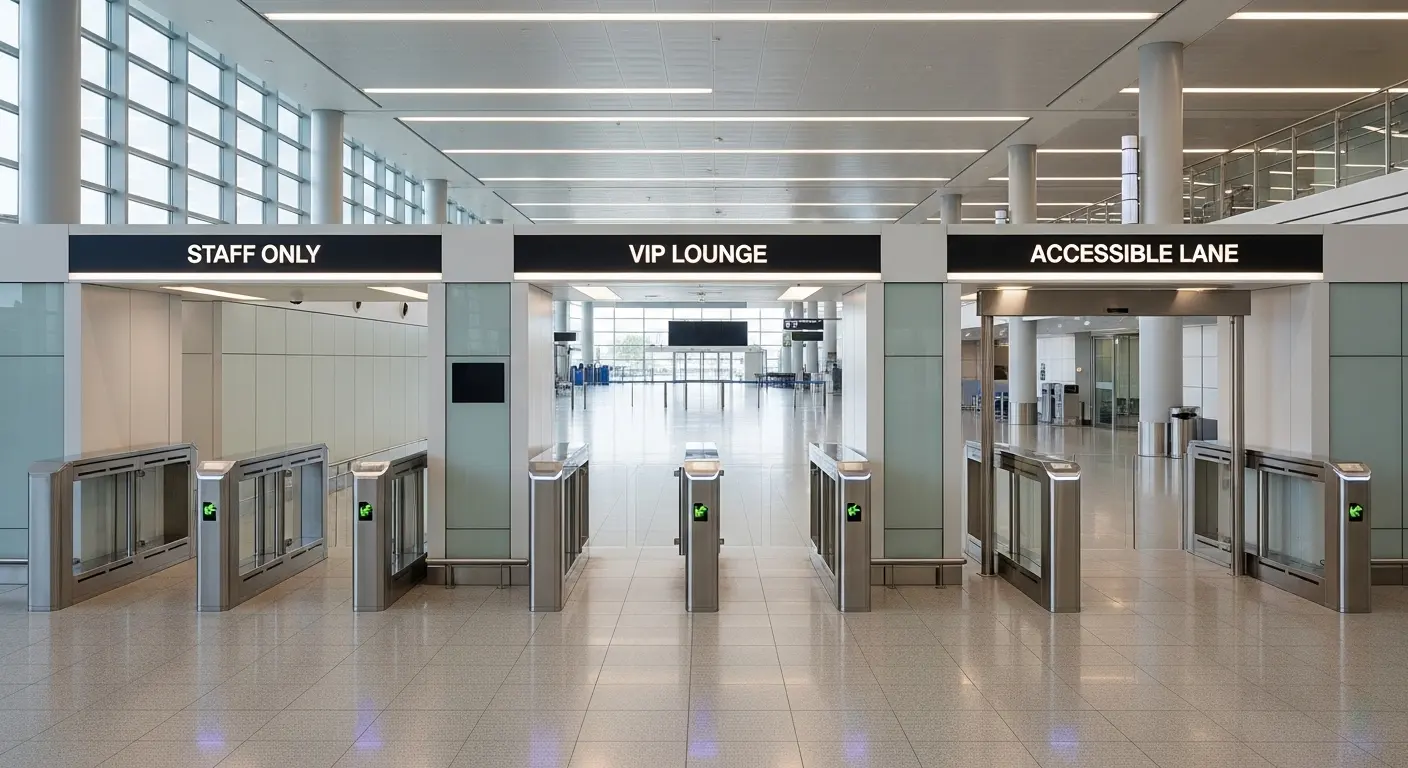
Hier machen die meisten Käufer den größten Fehler. Sie konzentrieren sich auf eine einzelne Gate-Spezifikation, anstatt jede Flughafenzone ihren spezifischen Anforderungen zuzuordnen. Nutzen Sie dieses Framework als Ausgangspunkt:
| Flughafenzone | Empfohlener Tortyp | Wichtige Priorität |
|---|---|---|
| Boarding-Gates | Klappenbarriere / Speed Gate | Durchsatzgeschwindigkeit |
| Einwanderung / Passkontrolle | eGate mit biometrischem Leser | Genauigkeit der Identität |
| Ankunftshallen | Speed Gate / Schwenktor | Ästhetik und Fahrgaststrom |
| VIP-Lounges | Glas-Geschwindigkeitsschrank oder Schwenktor | Leiser Betrieb und Ästhetik |
| Personalkorridore | Volle Höhe oder Anti-Tailgating | Physische Perimetersicherung |
| Barrierefrei / ADA-Fahrspuren | Breitspuriges Drehtor (900Mm ) | Einhaltung und Zugänglichkeit |
| Fracht- und Wartungsbereiche | Drehkreuz in voller Höhe | Perimeter-Kontrolle |
Beyond Gate-Typ, Bewerten auch Systemverbindungsanforderungen. (Auf welche Plattformen muss es verlinken??), Spitzenzeit-Durchsatzziele, Umweltbedingungen (Halle vs. im Freien, Klimakontrolliert vs. Feuchte Terminals), und ob der Flughafen Branding- oder architektonische Einschränkungen bezüglich der Kabinettoberfläche und -dimensionen hat.
Ironman Turnstile hat geliefertFlughafen-Drehkreuz-Tor Systeme über mehrere internationale Projekte hinweg, mit individuellen Kabinettmaßen, Finish-Optionen, und Lesekonfigurationen für spezifische Terminalspezifikationen verfügbar.
Häufige Fehler bei der Angabe eines Flughafen-Drehkreuz-Gates
Das Vermeiden dieser vier Fehler kann nach der Installation erhebliche Betriebskosten und Sicherheitsprobleme ersparen.
Fokus nur auf den Einheitspreis. Kostengünstige Gates versagen oft unter kontinuierlicher Leitung 24/7 Flughafen-Ladezyklen. Ein ausgefallenes Gate an einer Einstiegsspur führt zu unmittelbaren Problemen im Fahrgastmanagement und erzwingt eine manuelle Bearbeitung, was von Natur aus langsamer ist. Die lebenslangen Betriebskosten der Ausfallzeiten übersteigen bei weitem die anfänglichen Einsparungen einer günstigeren Einheit.
Ignorieren von Systemanschlussanforderungen. Ein Gatter, das sich nicht mit deinem DCS verbinden kann, Biometrische Plattform, oder das Zugangskontrollsystem keine Lösung ist. Es schafft eine manuelle Umgehung, die die gesamte Spur verlangsamt und den Zweck der automatisierten Zugangskontrolle zunichtemacht.. Überprüfen Sie immer die Protokollkompatibilität vor dem Kauf.
Unterschätzung der Spurbreite. Standardgewerbliche Breite von 550 mm für Bürogebäude arbeitet. An Flughäfen, Passagiere reisen mit Handgepäck, Rucksäcke, und manchmal auch Kinderwagen. Spezifizieren Sie 800-mm- bis 900-mm-Fahrspuren für jede primäre Fahrgastzone als Basislinie, Kein Upgrade.
Überspringen der Anti-Tailgating-Spezifikation. In Umgebungen mit hohem Volumen, Tailgating ist fast garantiert ohne eine ordnungsgemäße Multisensor-Erkennung. Einstrahlsensoren reichen für Flughafensicherheit nicht aus.. Verlangen Sie Dual-Zonen- oder Mehrstrahl-Infrarot als Standardpunkt in Ihrer Spezifikation.
FAQ: Flughafen-Drehkreuz-Tore
Was ist ein Flughafen-Drehkreuz-Gate und wo wird es genutzt?
EinFlughafen-Drehkreuz-Tor ist eine motorisierte Fußgängerkontrollbarriere, die an den Einstiegsstellen verwendet wird, Einwanderungskontrollen, Ankunftshallen, Personalkorridore, und Sperrzonen innerhalb von Flughäfen. Es überprüft die Qualifikationen (Barcode, biometrisch, oder RFID) und kontrolliert den Eingang Person für Person, Direktverbindung zu IT-Systemen von Fluggesellschaften und Sicherheitssystemen.
Welche Art von Flughafen-Drehkreuz-Gate eignet sich am besten für die Boarding-Bereiche?
Klappenschrank-Drehkreuze und Geschwindigkeitstore eignen sich am besten für Einstiegsstreifen. Beide bieten Durchsatzraten von 30 An 45 Personen pro Minute pro Spur sowie unterstützende Bordkarten-Barcode und QR-Code, die direkt am Gate gescannt werden. Ihre schnellen Panel-Reaktionszeiten halten den Spurrhythmus selbst während Peak-Boarding-Rushs stabil.
Kann ein Flughafen-Drehkreuz-Gate mit biometrischen Systemen verbunden werden??
Ja. Am modernstenFlughafen-Drehkreuz-Tor Modelle unterstützen Gesichtserkennung, Fingerabdruck, Iris, und Palmvenin Reader, entweder als eingebaute Module oder als Zusatzgeräte. Sie können sich mit dem DCS der Fluggesellschaft und den Einwanderungsdatenbanken verbinden, um die Identität in Echtzeit zu überprüfen, Beseitigung manueller Dokumentenkontrollen.
Wie breit sollte die Gate-Spur eines Flughafendrehkreuzes sein?
Für den allgemeinen Personenverkehr mit Handgepäck, Die empfohlene Mindestspurbreite beträgt 550 mm. Barrierefreiheitsspuren, Primäre Boarding-Zonen, und die Ankunftskorridore sollten 800 mm bis 900 mm Konfigurationen vorschreiben, um Gepäck zu tragen, Spaziergänger, Rollstühle, und Mobilitätshilfen, ohne Engpässe zu verursachen.
Welche Zertifizierungen sollte ein Flughafen-Drehkreuz-Gate haben?
Suche nach CE, FCC, ISO9001, und ROHS-Zertifizierungen als Mindeststandards. Diese bestätigen, dass das Gatter die Anforderungen an elektromagnetische Kompatibilität erfüllt, Internationale Sicherheitsbenchmarks, sowie Qualitätsmanagementstandards, die für kritische Flughafeninfrastruktur geeignet sind. Ironman Turnstile-Produkte verfügen über alle vier Zertifizierungen.
