


Bahnhofsdrehkreuz-Tor: Welcher Gate-Typ passt zu deiner Station, AFC-System, und Durchsatzanforderungen
2026-04-05


Für einen stark frequentierten Bahnhof oder Bahnsteig, Das korrekte Bahnhofs-Drehkreuz ist eine Klappenbarriere für Standardfahrspuren und ein Smart Speed Gate für Premium, Hochdurchsatz-Endstationen. Beide liefern 40–80 ppm pro Spur, vollständige AFC-Ticketing-Integration, und eine Outdoor-IP-Resilienz, die auf eine Transitbahnumgebung zugeschnitten ist. Laut NFPA 101 Lebenssicherheitscode, Jedes Stationstor auf einem ausgewiesenen Ausgangsweg muss im Inneren fail-safe geöffnet werden 3 Sekunden bei Brandalarm oder Stromausfall.
Dieser Leitfaden stellt Beschaffungsbeauftragte für Verkehrsbehörden bereit, Projektleiter der Station, AFC-Systemintegratoren, und EPC-Auftragnehmern eine Vergleichstabelle zum Tortyp zu transitspezifischen Kriterien, Ein Abschnitt zum Aufbau von Stationsszenarien, Eine Dwell-Event-Durchsatzformel, eine AFC-Integrationsmatrix, Outdoor-IP-Bewertungsanleitung, ADA-Anforderungen, und einen direkten Weg zu einem fabrikdirekten Zitat. Beginnen Sie mit dem Ironman-Bahnhofs-Gate-Bereich an derFußgängerkreuz-Seite zum Bahnhof.
Typen von Stationsdrehkreuzen – Vergleich anhand von transitspezifischen Kriterien
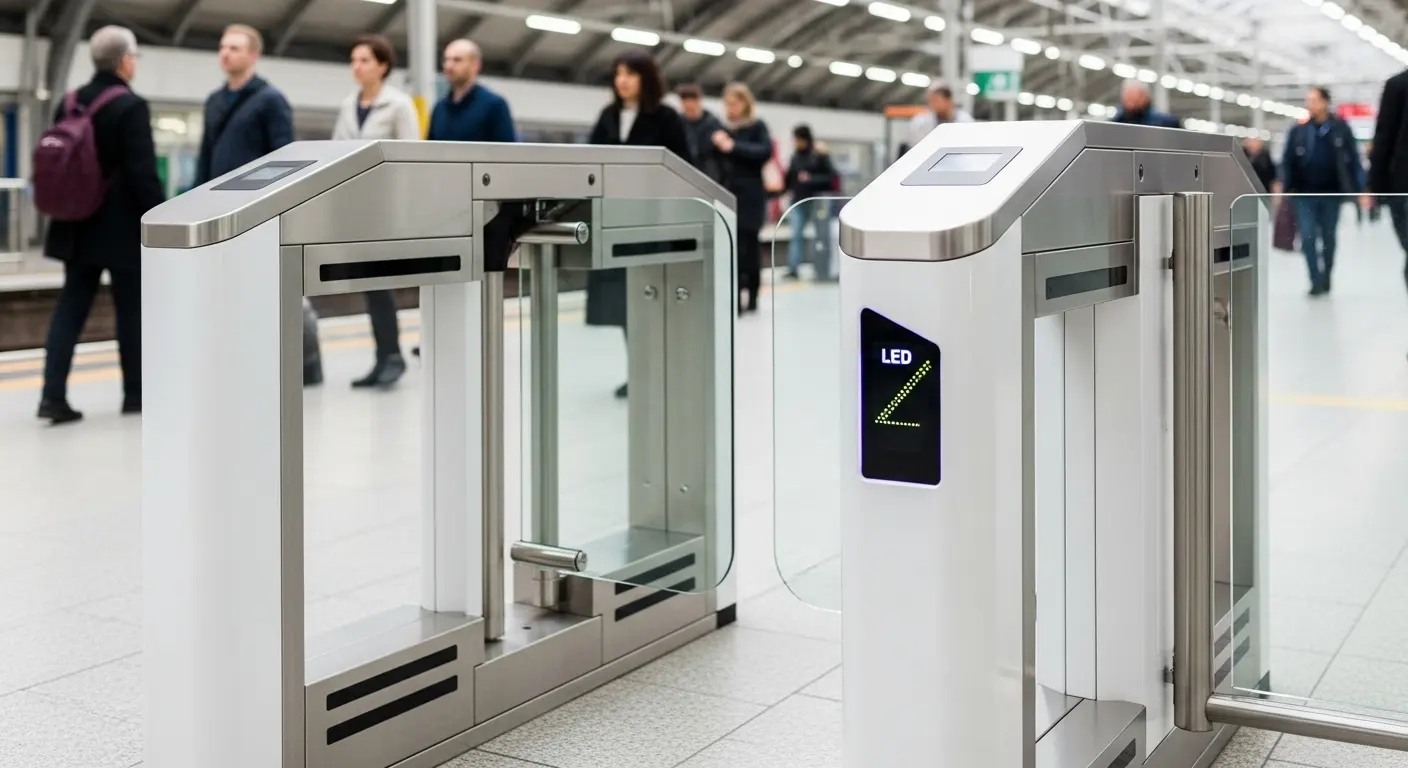
Fünf Tortypen decken das gesamte Spektrum der Stationsumgebungen ab. Jede hat eine andere Stationsfunktion, Durchsatzlast, und Anforderungen an die Resilienz im Freien. Die folgende Tabelle vergleicht sie hinsichtlich der Kriterien, die für eine Verkehrsspezifikation relevant sind.
| Gate-Typ | Durchsatz | AFC-Integration | Outdoor-IP | ADA / Breites Schiff | Fahrkartendurchsetzung | Bester Senderkontext | Einheitsbereich |
|---|---|---|---|---|---|---|---|
| Klappenbarriere | 40–60 ppm | RFID, QR, EMV, NFC | IP54 / IP65 opt. | Variante der breiten Fahrspur | Hoch | Bahnsteig, Metro-Standardspur | $450–3.000 Dollar |
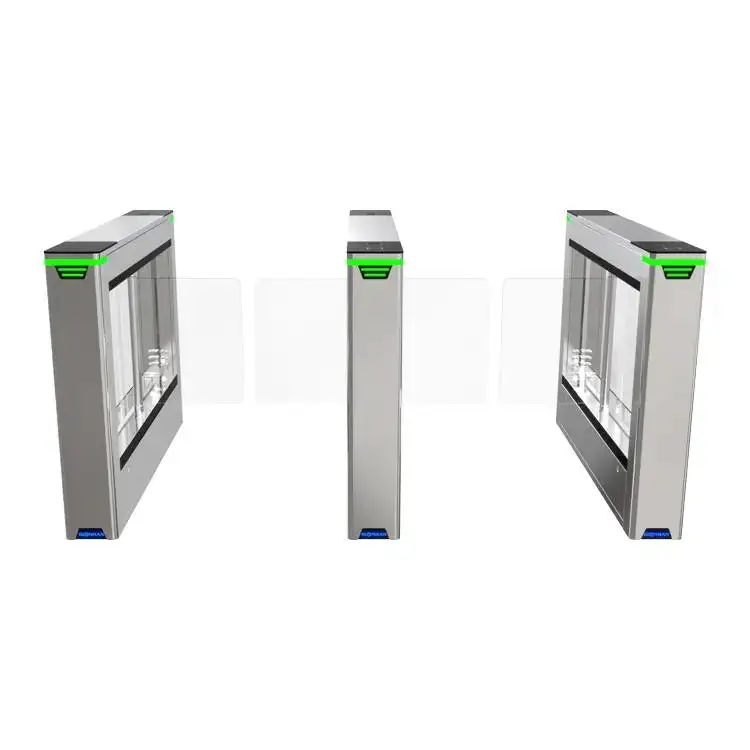
| Smart Speed Gate | 50–80 ppm | RFID, QR, EMV, NFC, biometrisch | IP54 | Variante der breiten Fahrspur | Moderat | Premium-Endstation, Hochdurchsatzstation | $1,300–8.000 Dollar |
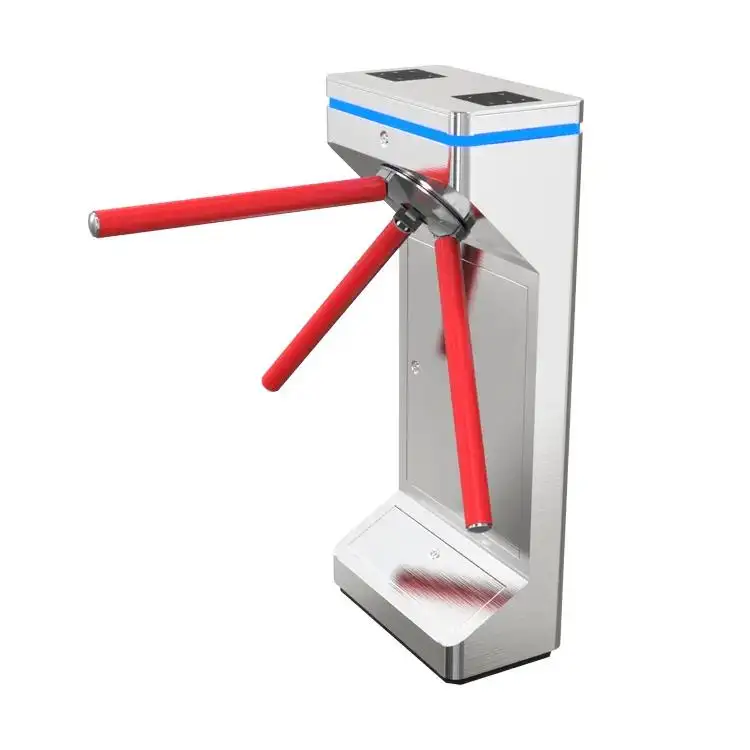
| Dreibein-Drehkreuz | 25–40 ppm | RFID, QR, Barcode | IP54 | Separate ADA-Spur | Moderat | Sekundärer Eingang, BRT, Budget-Nachrüstung | $200–1.200 Dollar |
| Drehkreuz in voller Höhe | 20–30 ppm | RFID, biometrisch | IP65 | Separate ADA-Spur | Maximum | Unbemannte Außenplattform, Umfang | $600–4.000 Dollar |
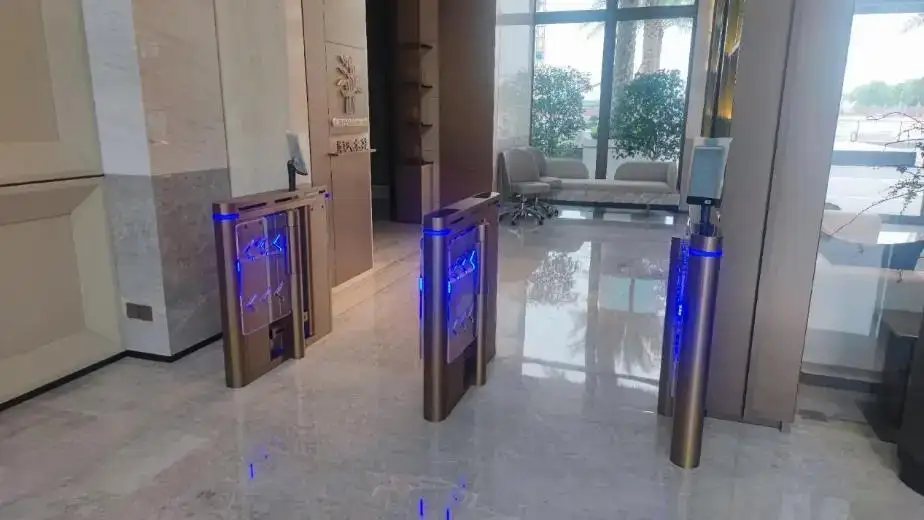
| Glasschiebentor | 30–50 ppm | RFID, QR, NFC | IP54 | Variante der breiten Fahrspur | Moderat | Premium-Empore, Stadtterminal | $800–4.000 Dollar |
Klappenschrank und Smart Speed Gate — Fahrkartenspuren für Hochauflastungsstationen
Die Klappenschranke ist das Standard-Drehkreuz für Bahn- und Fahrbahnspuren mit hohem Verkehrsaufkommen. Mit 40–60 ppm pro Spur, Er überwindet den Spitzen-Personenausbruch während eines Zugaufenthalts ohne Warteschlangenbildung. Das sensorbasierte Anti-Tailgating-Verhalten löst einen Alarm aus, bevor eine zweite Person die Passage abgeschlossen hat – und kombiniert physische und elektronische Fahrkartenkontrolle über das, was ein Stativarm allein leistet.
Das smarte Speedgate eignet sich für Hochleistungs-Endstationen und Premium-Stationsumgebungen in der Stadt. Bei 50–80 ppm und einer Freischaltzeit von 0,2 Sekunden, Er verarbeitet Spitzenpassagierzahlen schneller als jeder andere Gate-Typ auf Hüfthöhe. Für das Ironman Smart Speed Gate, das in Premium-Stationseinsätzen verwendet wird, Siehe dieSeite zum Drehkreuz mit Smart Speed Gate.
Dreibein-Drehkreuz und volle Höhe – Sekundär- und Außenstationen
Dreibein-Drehkreuze bleiben das kostengünstigste Bahnhofstor für Nebeneingänge, Budget-Retrofit-Positionen, und BRT-Standardspuren. Bei 200–1.200 Dollar pro Spur und 25–40 pro Minute, sie liefern die RFID/QR AFC-Integration zu den niedrigsten Investitionskosten pro Spur. Eine separate ADA-Umgehungsspur ist neben jeder Dreibein-Torbank erforderlich..
Drehkreuze in voller Höhe eignen sich für unbemannte Außenstationen – offene Bahnsteigperimeter, Unbesetzte Nebeneingänge, und Fahrkartenschranken, die eine physische Zugangskontrolle erfordern. Ihre IP65-Freiluftberechtigung und das physische Käfigprofil verhindern das Überspringen an unbeaufsichtigten Stellen. Für den Ironman wird der geneigte achteckige Dreibein-Drehkreuz bei günstigen Stationseinsätzen verwendet, Siehe diegeneigte achteckige Dreibein-Drehkreuzseite.
Stationsdrehkreuz nach Stationstyp – welches Tor gehört wohin
Der Bahnhofstyp und die Spitzenbelastung bestimmen die Gate-Spezifikation – nicht nur die Kategorie der Transitlinie. Ein Hochverkehrsbahnhof und eine Stadtbahnhaltestelle im selben System erfordern völlig unterschiedliche Gate-Typen und Fahrspuranzahl.
| Bahnhofstyp | Empfohlenes Tor | Spuren | Schlüsselanforderung |
|---|---|---|---|
| Hochvolumen-Eisenbahnendbahnhof | Klappenbarriere | 4–10 + ADA | Maximaler Durchsatz, AFC, Anti-Tailgating, ADA |
| Standard-Metrobahnsteig | Klappenbarriere | 2–5 + ADA | Durchsatz, AFC, ADA |
| BRT-Terminal | Dreibein oder Klappenbarriere | 2–4 + ADA | Niedrige Kosten, RFID/QR AFC, ADA-Umgehung |
| Stadtbahnhaltestelle | Dreibein oder Klappenbarriere | 1–3 + ADA | Kompakte Fläche, RFID/QR AFC, ADA |
| Unbemannte Außenplattform | Drehkreuz in voller Höhe | 1–2 | IP65, maximale Perimeter-Kontrolle |
| Premium-Stadtterminal / Zwischenstation | Smart Speed Gate oder Glas-Schiebetor | 2–6 | Ästhetik, Hochdurchsatz, AFC |
| Sekundarstufe / Eingang außerhalb der Hauptverkehrszeiten | Stativ oder geneigtes Bogenstativ | 1–2 | Niedrige Kosten, AFC, ADA-Umgehung |
Hochverkehrs-Endbahnhof und Metrobahnsteige
Ein Hochvolumen-Eisenbahnendbahnhof erfordert einen Mindestdurchsatz von Torbänken 200+ Fahrgäste pro Minute während der Hauptverkehrszeiten. Mit 40–60 ppm pro Flap Barriere-Spur, Eine Reihe von 4–5 Spuren deckt diese Anforderung ab, wobei eine Reservespur für Wartungsperioden eine Reservespur umfasst. Basierend auf unserer Analyse des Bahnhofsausbaus, Der konstanteste Durchsatzausfall bei Stationstoren ist die Dimensionierung für die durchschnittliche stündliche Einstiegsrate und nicht der Spitzen-Verbleibs-Ereignis-Burst – bei dem 80–150 Fahrgäste in einem 60–90-Sekunden-Fenster zusammenkommen.
Standard-Metrobahnsteige mit einer Kapazität von 100–200 ppm benötigen 2–4 Klappen-Barrierespuren plus eine ADA-breite Gangspur an jeder Torbank. Für das Ironman-Glasschiebetor, das in Premium-Stadtterminals verwendet wird, Siehe dieGlas-Schiebetor-Drehkreuz-Seite.
BRT-Terminals, Haltestellen der Stadtbahn, und Nebeneingänge
BRT-Terminals und Stadtbahnhaltestellen verkehren mit niedrigeren Spitzenlasten als ein Hauptbahnendbahnhof. Ein Dreibein-Drehkreuz mit 25–40 ppm übernimmt das Volumen an höchstens BRT- und Stadtbahn-Fahrkartenpositionen zu den niedrigsten Kapitalkosten pro Fahrspur. Laut ITDP BRT-Leitfadendaten, Einziehbare Flügeltore reichen 60 ppm, während rotierende Armstative an derselben Position 25–40 ppm erreichen. Spezifizieren Sie eine Klappenbarriere, an der eine BRT-Station einen großen Umschlagknotenpunkt mit höheren Spitzenlasten bedient.
Sekundär- und Nebenstationseingänge benötigen ein bis zwei Dreibeinspuren plus eine ADA-Umgehungsspur. Die geneigte Bogen-Stativkonfiguration eignet sich für enge Stationspositionen, bei denen ein Standard-Stativgehäuse den verfügbaren Gangplatz übersteigt. Für die geneigte Bogen-Dreibein-Drehkreuz-Konfiguration, Siehe dieSeite mit geneigtem Bogen-Dreibein.
AFC-Integration für Drehkreuze der Stationen
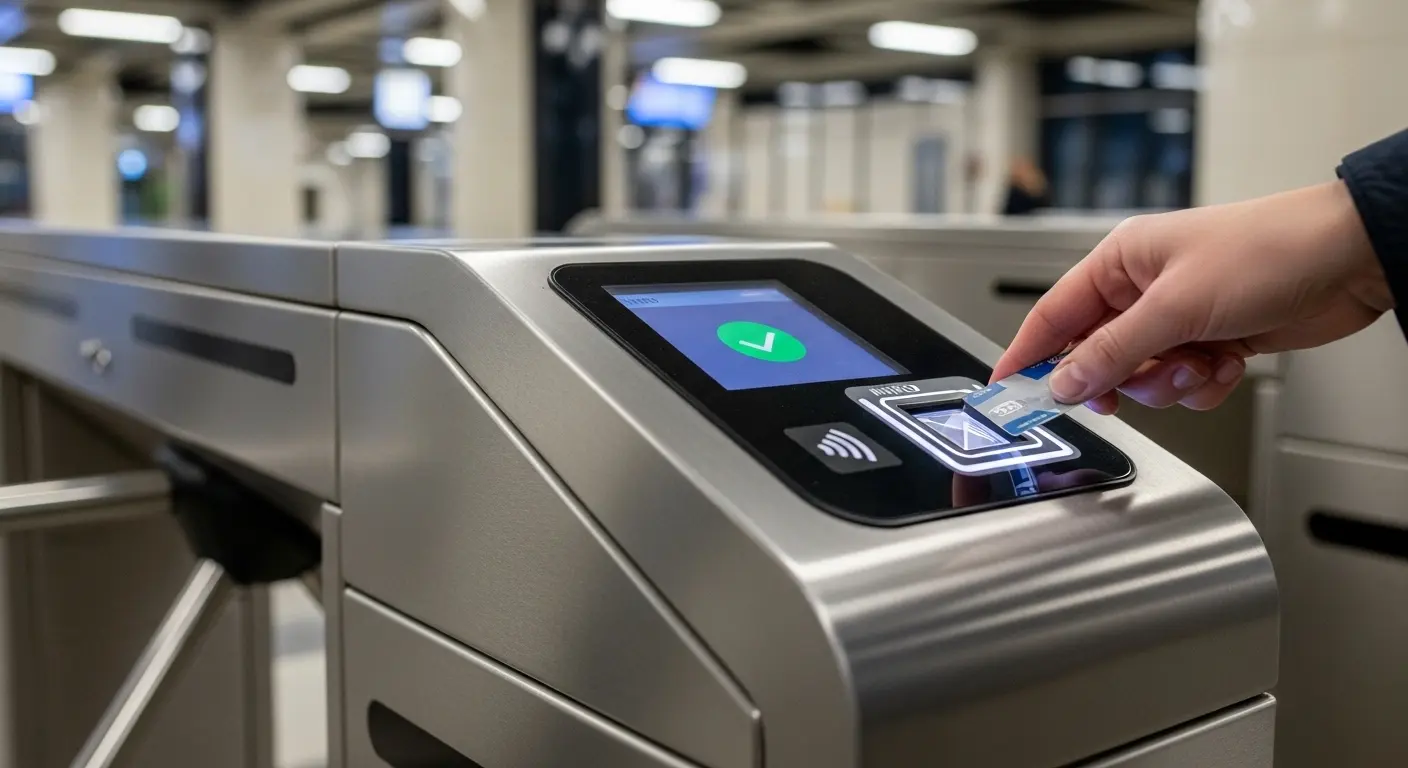
Ein Drehkreuz der Station muss die Fahrkartenausweise der Verkehrsbehörde bereits in der Spezifikationsphase akzeptieren – nicht als Nachinstallationskonfiguration. Jedes AFC-Protokoll erfordert eine spezifische Lesehardware, die bei der Herstellung in die Gate-Einheit integriert ist.
| Ticketing-Berechtigung | Protokoll | Lesehardware | Kompatible Gattertypen |
|---|---|---|---|
| RFID-Transitkarte | ISO 14443 / Wiegand | 13.56 MHz-Leser | Klappenbarriere, Speed Gate, Stativ, volle Höhe |
| QR E-Ticket (Mobil oder gedruckt) | TCP/IP | 2D-Barcode-Scanner | Klappenbarriere, Speed Gate, Stativ |
| EMV kontaktlose Bankkarte | ISO 14443 | EMV kontaktloser Leser | Klappenbarriere, Speed Gate |
| NFC Mobile Pay | ISO 18092 / HCE | NFC-Leser | Klappenbarriere, Speed Gate |
| Gesichtserkennung | TCP/IP | IP-Kameramodul | Klappenbarriere, Speed Gate |
| Legacy-Barcode / Magnetstreifen | RS232 | Swipe / Scan-Reader | Stativ (Nur Altsysteme) |
Basierend auf unserer Erfahrung mit Stationseinsätzen, die konstanteste Spezifikationslücke in der AFC ist das Fehlen einer Doppelleser-Konfiguration – ein 13.56 MHz-RFID-Leser und ein QR-Scanner in derselben Gate-Einheit. Dies gilt sowohl für Transitkarten-Nutzer als auch für E-Ticket-Nutzer von einer Spur, ohne separate Kanäle für jede Zugangsart. Bestätigen Sie sowohl das AFC-Protokoll als auch die erforderliche Lesehardware, bevor Sie die Gate-Bestellung aufgeben. Für das Ironman-Anti-Tailgating-Tor mit Multi-Credential-Konfiguration, Siehe dieAB-Drehkreuz-Gate-Seite gegen Tailgating.
Durchsatzplanung und Outdoor-IP-Bewertung für Stationstore
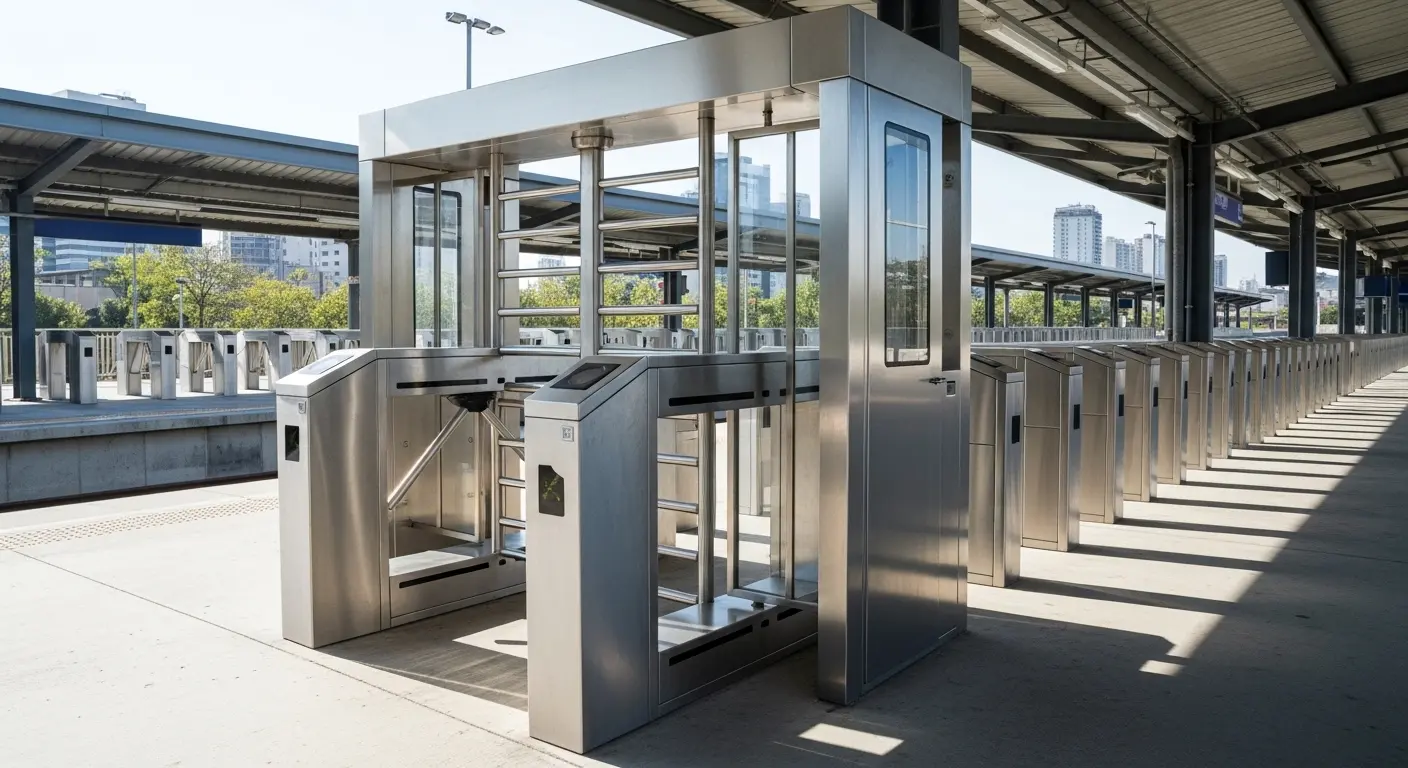
Zwei Spezifikationsentscheidungen verursachen die meisten Überarbeitungen bei Stationstor-Projekten: Unterangabe der Spuranzahl aufgrund falscher Durchsatzberechnungen, und die IP-Bewertung im Freien für die physische Umgebung der Station zu unterschätzen.
Dwell-Event-Durchsatzformel
Spuren = Fahrgäste pro Zug ÷ Verweilfenster (Nachschlag) × 60 ÷ Gate ppm
Beispiel 1 — Eisenbahnendbahnhof, 600-Personenzug, 90-Zweites Verbleib, Klappenbarriere bei 50 ppm:
600 ÷ 90 × 60 = 400 ppm. 400 ÷ 50 = 8 Spuren →8 Minimum der Klappensperrenspuren.
Beispiel 2 — Haltestelle der Stadtbahn, 150 Passagiere, 60-Zweites Verbleib, Tripod bei 35 ppm:
150 ÷ 60 × 60 = 150 ppm. 150 ÷ 35 = 4.3 Spuren →5 Minimum der Dreibeinspuren.
Größe für den Dwell-Event-Peak – nicht die durchschnittliche stündliche Teilnahmequote. Die durchschnittliche Ratengröße spezifiziert konsequent die Anzahl der Spuren für Hochauflastungsstationen.
Außen-IP-Bewertung für Stationsumgebungen
| Stationsumgebung | Mindest-IP | Empfohlene IP | Begründung |
|---|---|---|---|
| Geschlossene Innenstation | IP42 | IP54 | Dust, gelegentliches Platschen |
| Halbüberdachter Bahnsteig | IP54 | IP54 | Regenspritzer, Windgetriebener Staub |
| Freiliegende Außenplattform | IP54 | IP65 | Direkter Regen, Temperaturzyklen |
| Küste / Feuchte Umgebung | IP65 | IP65 | Korrosion, Salzluft, Hohe Luftfeuchtigkeit |
| BRT-Terminal auf Straßenniveau | IP54 | IP65 | Volle Außenbelichtung |
Nach unserer Erfahrung mit Außenstationstoren, jedes Projekt, bei dem IP54-Hardware für eine vollständig exponierte Plattform spezifiziert war, erforderte ein Upgrade auf IP65 innerhalb 12 Monate – verursacht durch Kondensation, die durch Temperaturwechsel zwischen Tages- und Nachttiefstwerten in den Gate-Regler eindringt. Sprich IP65 für jede exponierte Außenbahnsteig am Bestellpunkt an.
ADA- und Sicherheitsvorgaben für Drehkreuze der Stationen
ADA-Konformität und NFPA 101 Notfallsicherheitsausstiege sind für jede Stationsdrehkreuz-Öffnung verpflichtende Anforderungen – keine optionalen Ergänzungen.
Anforderungen an ADA-barrierefreie Tore
Nach ADA-Standards für barrierefreies Design (USA. Zugangstafel), Jede Fahrkartenbank muss mindestens einen zugänglichen Gang mit mindestens 32 Zoll Länge haben (812 Mm) Freie Breite. Die bevorzugte moderne Verkehrsspezifikation ist 48 Zoll oder breiter – Anpassung des Rollstuhls, Kinderwagen, und gleichzeitig Gepäckzugang. Die ADA-Spur muss in derselben Gate-Bank liegen – nicht an einem separaten Stationsstandort. Für Stationseinsätze, die staatlichen oder öffentlichen Verkehrsfunktionen dienen, Siehe dieSeite zum Zugang zu Regierungseinrichtungen.
NFPA 101 Notfallsicherheit
Laut NFPA 101 Lebenssicherheitscode, Jedes Drehkreuz der Station auf einem festgelegten Notausgangsweg muss sich in die vollständig geöffnete Position innerhalb des Bereichs zurückziehen 3 Sekunden Feueralarmauslösung oder Stromausfall im Netz – und bleiben während der gesamten Dauer des Notfalls offen. Der Notfallauslöser muss direkt über einen Trockenkontakt-Eingang mit dem Brandmelderbedienfeld der Station verbunden werden. Ein softwarebasierter Befehl mit Netzwerkverzögerung erfüllt diese Anforderung nicht. Bestätigen Sie die Integration des Brandschutzpanels und die Reaktionszeit der Notfallvorrichtung in der Spezifikationsphase – vor der Genehmigung des Layouts –.
Ein Werksangebot für das Drehkreuz Ihrer Station einholen
Vier Punkte reichen für ein vollständiges Werksangebot innerhalb des Zeitraums aus 12 Geschäftszeiten.
- Definiere deinen Stationstyp und die Spitzenlast: Eisenbahnendbahnhof / Bahnsteig / BRT-Terminal / Stadtbahnhaltestelle / Sekundärer Eingang + Zugkapazität und Aufenthaltsfenster in Sekunden
- Berechnen Sie Ihre Spurenanzahl: Wenden Sie die Formel des Verweilereignisses an – Fahrgäste pro Zug ÷ Verweilsekunden × 60 ÷ Tor ppm = Spuren; Fügen Sie pro Gate-Bank eine ADA-breite Gangspur hinzu
- AFC-Protokoll und IP-Bewertung bestätigen: RFID / QR / EMV / NFC – bestätigen Sie das Ticketprotokoll der Verkehrsbehörde; Bestätigen Sie die Außen-IP-Bewertung für die Umweltbelastung der Station
- Reichen Sie Ihr Stationsbriefing ein: Besuchen Sie die Solutions Hub für ein Werks-Direkt-Stations-Drehkreuz-Angebot, innerhalb 12 Geschäftszeiten, mit CE, ISO9001, FCC, und die RoHS-Zertifizierungsdokumentation enthalten
Häufig gestellte Fragen
F1: Welche Art von Drehkreuztor eignet sich am besten für einen Bahnhof?
Für einen Bahnhof mit hohem Verkehrsaufkommen, Eine Klappenschranke ist das beste Drehkreuz für Standardfahrbahnen und liefert 40–60 ppm pro Spur, sensorbasiertes Anti-Tailgating, und vollständige AFC-Ticketing-Integration (RFID, QR, EMV, NFC). Ein intelligentes Speed Gate mit 50–80 ppm eignet sich für Premium-Endstationen und Hochdurchsatz-Stadtstationen, bei denen Durchsatz das primäre operative Thema ist. Ein Dreibein-Drehkreuz mit 25–40 ppm eignet sich für Nebeneingänge und günstige Nachrüstpositionen zu 200–1.200 Dollar pro Spur. Ein vollwertiger Drehkreuz mit 20–30 ppm eignet sich für unbemannte Außenplattformbereiche, bei denen maximale physische Zugangskontrolle und IP65-Außenwiderstand erforderlich sind. Der richtige Gate-Typ hängt von der Stationsfunktion ab – nicht nur von der Kategorie der Transitlinie.
F2: Wie integriert sich ein Stationsdrehkreuz mit AFC-Ticketing-Systemen??
Ein Stationsdrehkreuz integriert sich mit AFC-Ticketsystemen über spezielle Lesehardware, die in die Gate-Einheit integriert ist: a 13.56 MHz ISO 14443 RFID-Leser für Transitkarten und EMV-Bankkarten, einen 2D-Barcode-Scanner für QR-E-Tickets, ein ISO 18092 NFC-Leser für mobile Bezahlung, und ein Gesichtserkennungskamera-Modul für biometrische Verifikation. Die meisten Verkehrsbehörden spezifizieren mittlerweile eine Doppel-Lese-Konfiguration – RFID plus QR-Scanner – sodass eine Gate-Spur sowohl das Abhören der Transitkarte als auch das Scannen von E-Tickets ohne getrennte Fahrspuren abdeckt. Bestätigen Sie das AFC-Protokoll der Verkehrsbehörde und die erforderliche Lesehardware in der Spezifikationsphase. Hardwareänderungen nach der Installation verlängern typischerweise 3–6 Wochen zur Inbetriebnahme und erhöhen die Projektkosten um 8–15 %.
F3: Welchen Durchsatz muss ein Stationsdrehkreuz verarbeiten?
Verwenden Sie die Dwell-Event-Formel: Fahrgäste pro Zug ÷ Wohnfenster (Nachschlag) × 60 ÷ Tor ppm = Spuren. Für einen 600-Personen-Bahnzug mit 90-Sekunden-Dwelle und Klappenbarriere bei 50 ppm, Die Mindestanzahl der Spuren ist 8 fahrspuren. Für eine 150-Personen-Stadtbahnhaltestelle mit 60-sekündigem Aufenthalt und Stativ in 35 ppm, das Minimum ist 5 fahrspuren. Größe für den Dwell-Event-Peak – nicht die durchschnittliche stündliche Teilnahmequote. Laut ITDP BRT-Leitfadendaten, Einziehbare Flügeltore reichen 60 ppm, während rotierende Armstative an derselben Position 25–40 ppm erreichen.
F4: Welche IP-Berechtigung benötigt ein Außen-Drehkreuz-Tor?
Für einen halbüberdachten Bahnsteig mit gelegentlichem Regenspritzer, IP54 ist die minimal akzeptable IP-Freigabe für ein Drehkreuzgehäuse der Station.. Für eine vollständig freiliegende Außenplattform – direkter Regen, Temperaturzyklen, Küsten- oder Hochluftfeuchtigkeitsumgebungen – IP65 ist die korrekte Spezifikation. In unserer Erfahrung mit Außenstationen, jedes Projekt, bei dem IP54-Hardware für eine vollständig exponierte Plattform spezifiziert war, erforderte ein Upgrade auf IP65 innerhalb 12 Monate – angetrieben durch Kondensation, die vom Tages-Nacht-Temperaturzyklus in den Gate-Regler eindringt. Sprich IP65 für jede exponierte Außenbahnsteig am Bestellpunkt an.
F5: Was sind die ADA-Anforderungen für ein Drehkreuz der Station??
Nach ADA-Standards für barrierefreies Design (USA. Zugangstafel), Jede Fahrkartenbank muss mindestens einen zugänglichen Gang mit mindestens 32 Zoll Länge haben (812 Mm) Freie Breite. Die bevorzugte Spezifikation des Nahverkehrs für Neubauten ist 48 Zoll oder breiter – Anpassung des Rollstuhls, Kinderwagen, und Gepäckzugang von einer Fahrspur aus. Die ADA-Spur muss Teil derselben Gate-Bank sein, Nicht an einem separaten Standort. Dreibein-Drehkreuze und vollhohe Drehkreuze erfordern eine separate ADA-Spur neben der Standard-Torbank – Klappenbarrieren und intelligente Geschwindigkeitsschranken sind in breitspurigen Konfigurationen erhältlich, die die ADA-Anforderungen innerhalb derselben Einheit erfüllen.
F6: Was ist die Sicherheitsvorgabe für ein Drehkreuz der Station??
Laut NFPA 101 Lebenssicherheitscode, Jedes Drehkreuz der Station auf einem festgelegten Notausgangsweg muss sich in die vollständig geöffnete Position innerhalb des Bereichs zurückziehen 3 Sekunden Feueralarmauslösung oder Stromausfall, und während der gesamten Dauer des Notfallereignisses geöffnet bleiben. Der Fail-Safe-Trigger muss direkt über einen Trockenkontakt-Eingang mit dem Brandmeldebedienfeld der Station verbunden werden – ein Softwarebefehl mit Netzwerkverzögerungen erfüllt diese Anforderung nicht. Eine manuelle Single-Action-Übersteuerung muss zudem jederzeit von beiden Seiten des Tores zugänglich sein. Bestätigen Sie die Integration des Brandschutzpanels und die Notfall-Reaktionszeit in der Spezifikationsphase, Vor der Genehmigung des Layouts.
Drei Entscheidungen, die die Spezifikation Ihres Drehkreuztors definieren
Gattertyp an die Stationsfunktion und die Spitzenlast des Dwell-Events anpassen – nicht der durchschnittliche Stundensatz. Bestätigen Sie das AFC-Ticketingprotokoll und die Konfiguration des Doppellesers am Bestellpunkt. Speifen Sie von Anfang an IP65 für jede freiliegende Außenstationsplattform. Diese drei Entscheidungen verhindern die häufigsten Überarbeitungsszenarien bei Stationstor-Projekten und stellen sicher, dass das Torsystem beim ersten Versuch die Akzeptanztests der Verkehrsbehörde besteht. Gib deinen Stationstyp ein, Zuglast, Wohnfenster, AFC-Protokoll, und die Outdoor-IP-Anforderung an dieSolutions Hub für ein Werks-Direkt-Stations-Drehkreuz-Angebot, innerhalb 12 Geschäftszeiten.
